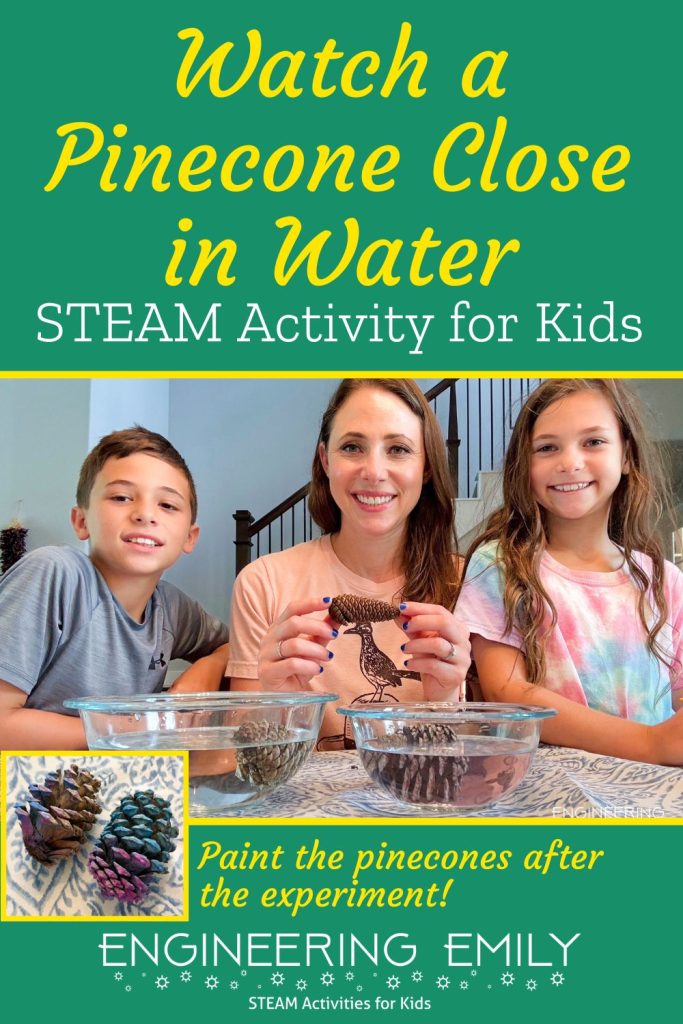
This STEAM activity couldn’t be easier. All you need to do is get outside and collect pinecones and fill a bowl of water and you’re ready to get started. Even though this activity is simple, it is educational and fun.
My older two kids had a soccer camp last week. There were many large pine trees surrounding the fields, so to fill some of the downtime with my toddler during the camp, we searched for pinecones. My toddler had fun finding and collecting pinecones. She noticed immediately that they were very sharp and learned how to carefully pick them up to avoid being pricked by the sharp tips.
She asked me if we could bring the pinecones home to paint them. Of course I said yes, and I told her not only will we paint them, but we will do a science experiment with them first! She was so excited to bring them home and get started!
My big kids were shocked at the results of putting the pinecone in water, and they really enjoyed the activity. We did it again during a playdate the following week, and it was a hit with everyone! We know you will love it too!
Watch the Activity:
You can see the pinecones close before your eyes in my YouTube and Instagram videos embedded below. Be sure to like and follow both my YouTube and Instagram accounts to never miss an EngineeringEmily STEAM Activity!
Watch a Pinecone Close in Water on YouTube:
Watch a Pinecone Close in Water on Instagram:
Activity Overview:
This is a simple, no cost activity. You can spend time outdoors searching for and collecting pinecones, then bring them indoors to complete the activity with a bowl of water. Painting the pinecones is optional, but highly recommended. They make beautiful centerpiece or yard decorations! This activity is recommended for children ages 3+.
Materials:
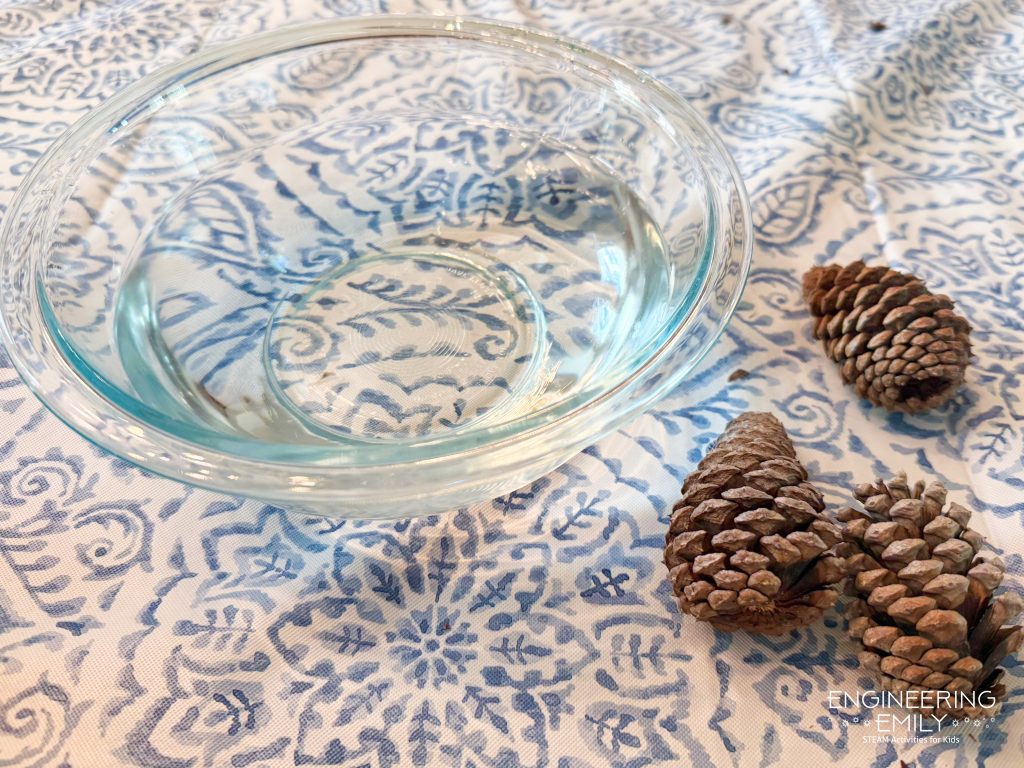
- Pinecones
- Bowl
- Water
- Tongs (optional)
- Paint (optional)
Safety:
Pinecones can be very sharp. Use caution when touching the pinecones, especially if it is a variety with sharp tips. If the pinecone is too sharp to touch you may use tongs to move the pinecones into and out of the water for the experiment. Since water is involved, have towels on hand to clean up any spills to prevent slips and falls.
Procedure:
- Go outside to collect several pinecones.
- Fill a large bowl about 1/2 to 2/3 full with water.
- Drop the pinecone into the bowl of water.
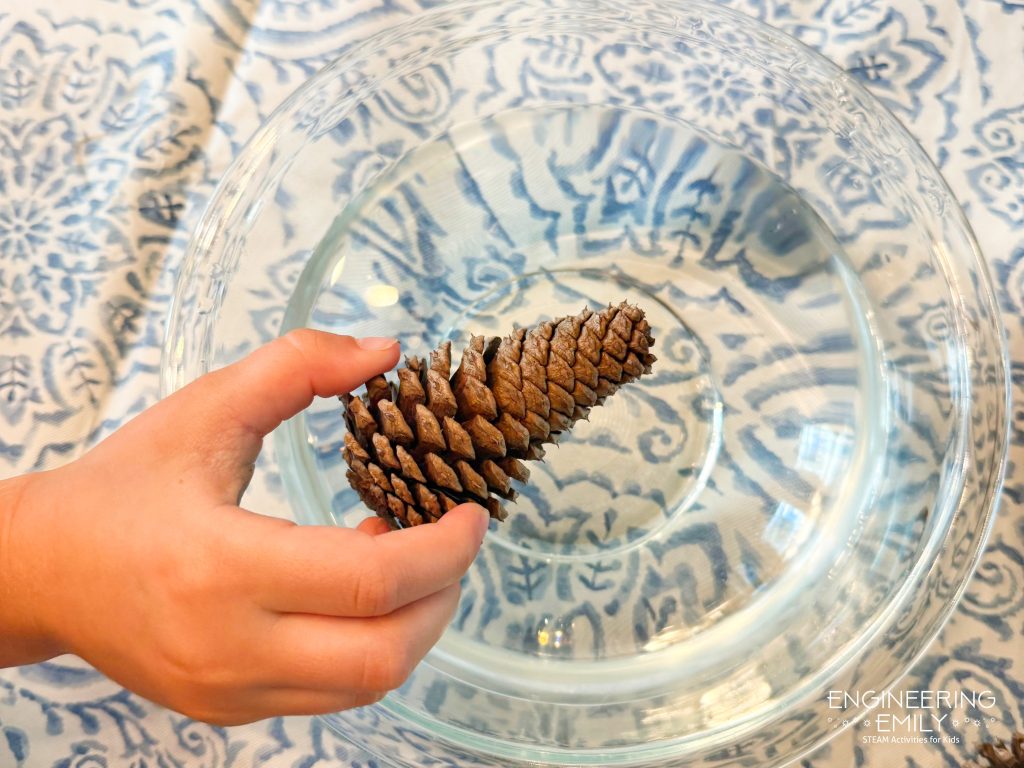
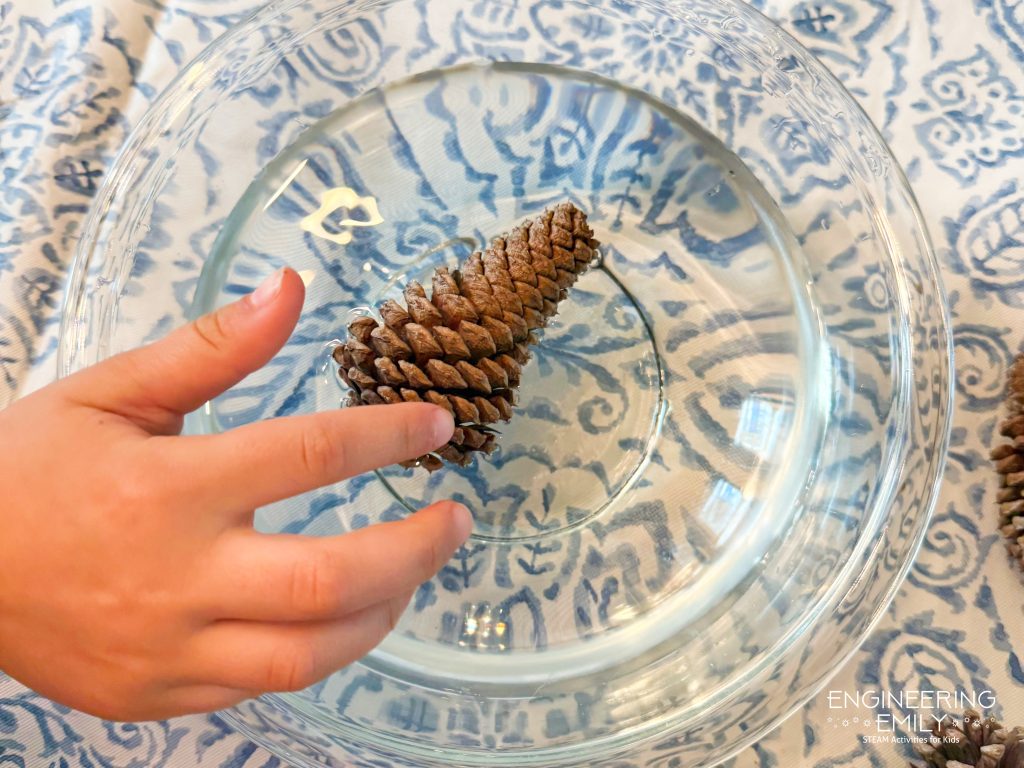
- Observe what immediatly happens.
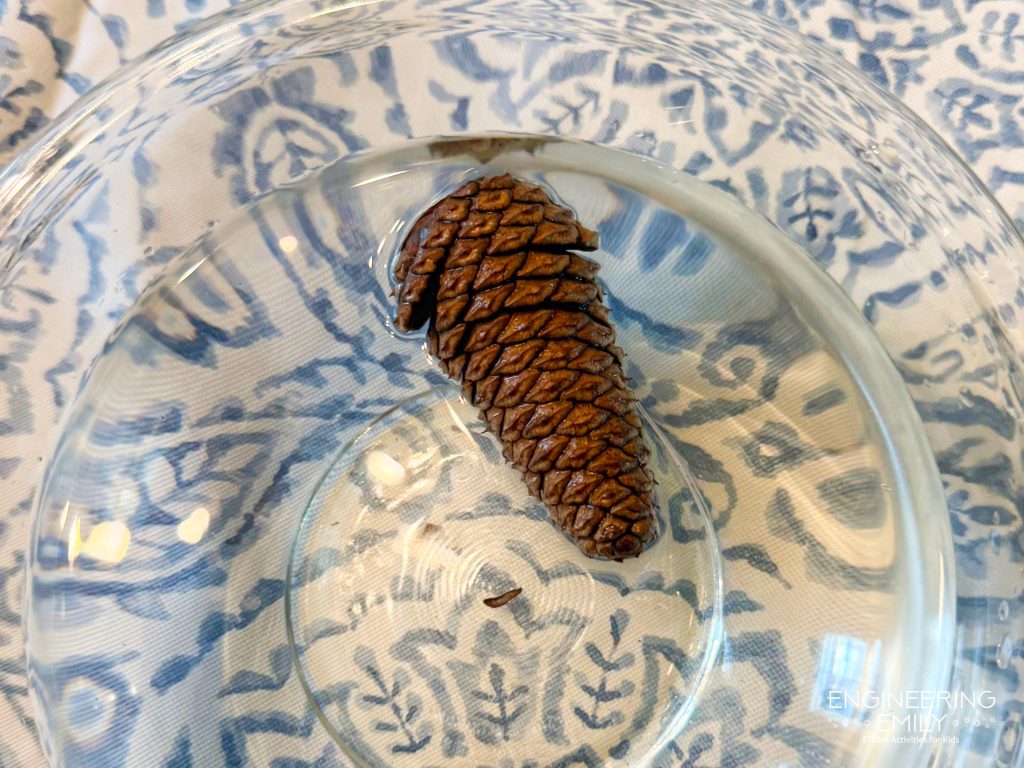
- The pinecone floats
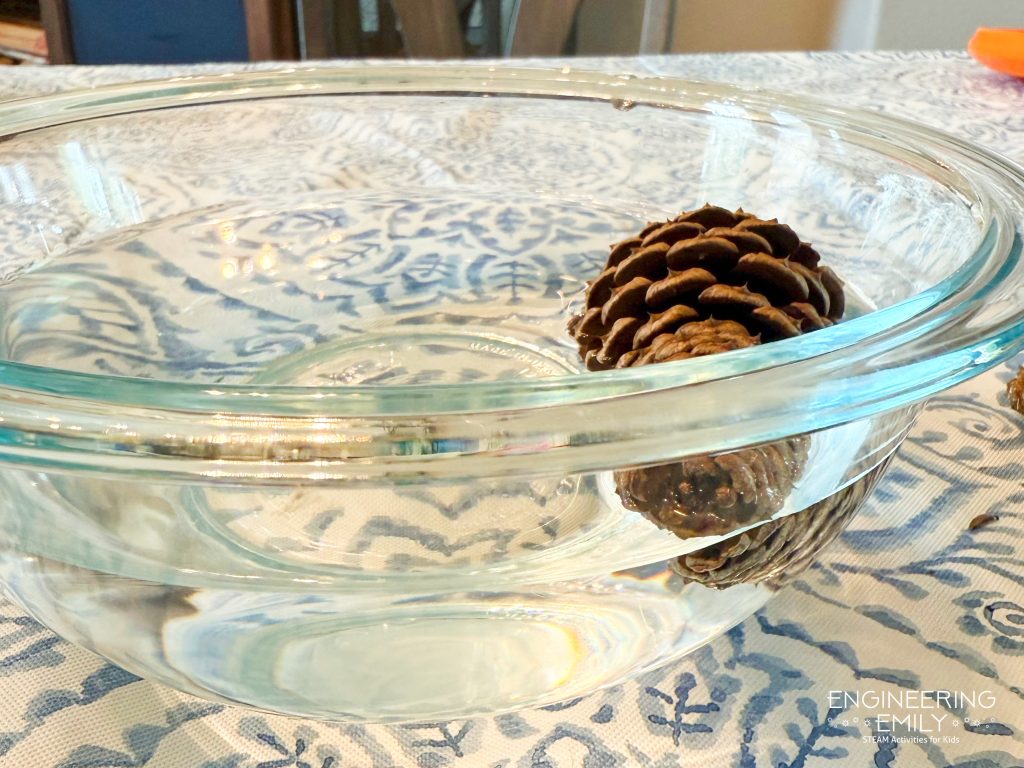
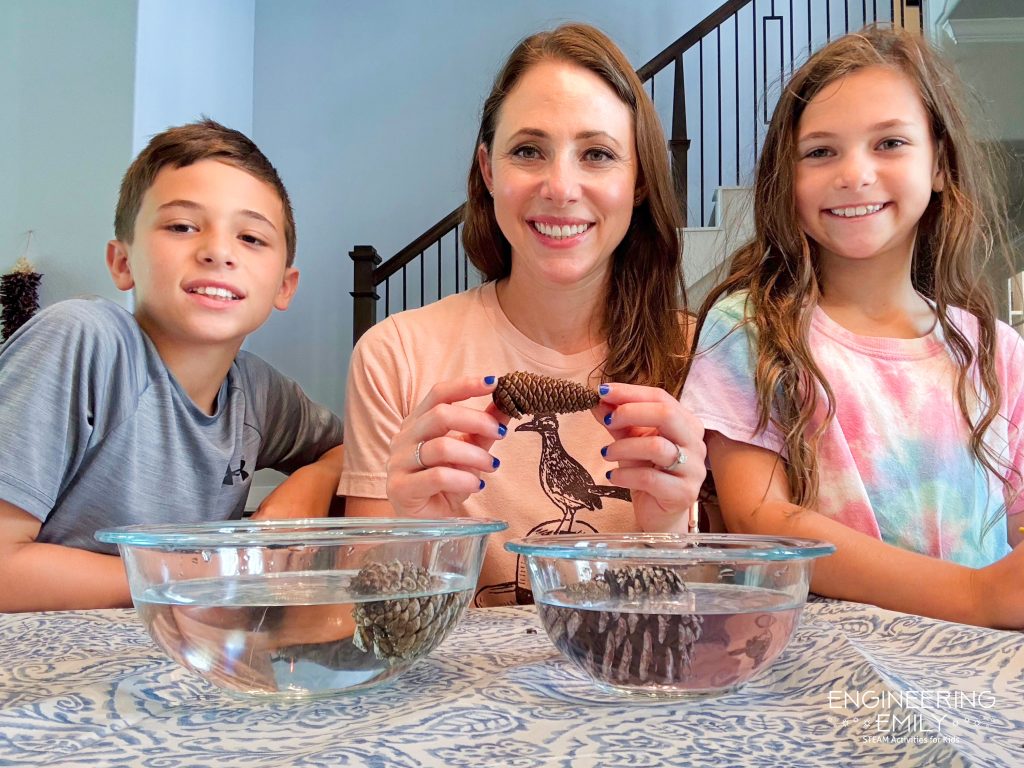
- Keep watching the pinecone in the water for the next 5-10 minutes. You will see the pinecone eventually close up completely.
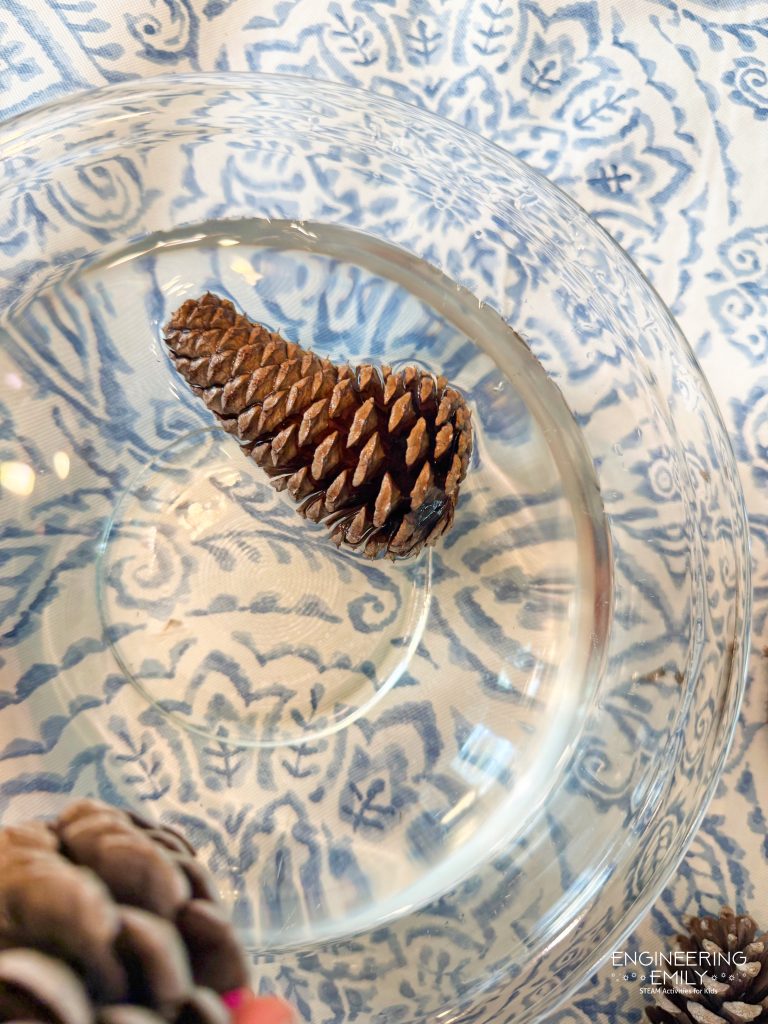
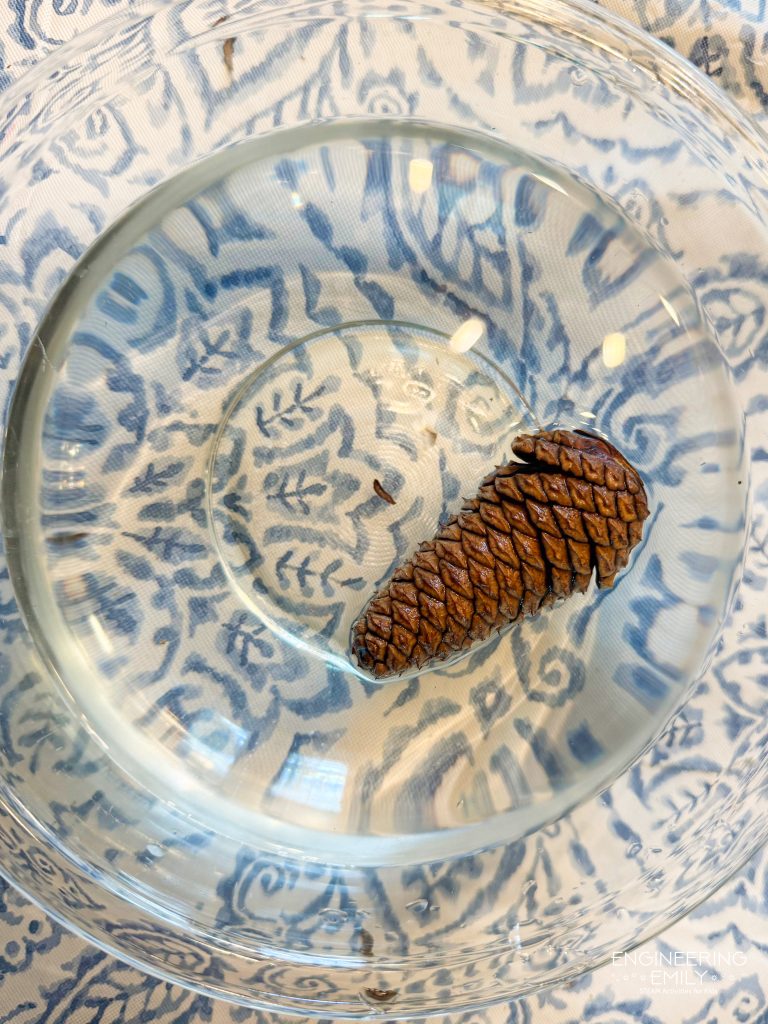
- After 10 minutes the pinecone scales should be closed completely. You can pull the pinecone from the water to take a closer look at it.
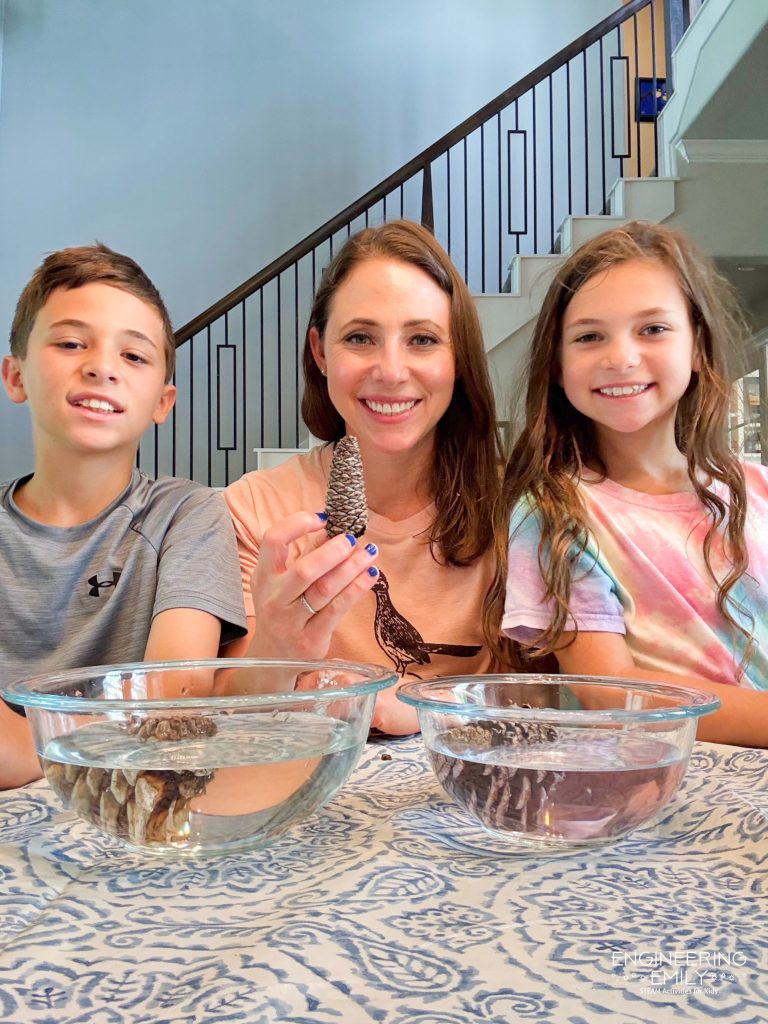
- You may now paint the pinecone, if desired. It is a lot easier to paint a closed pinecone than an open pinecone.
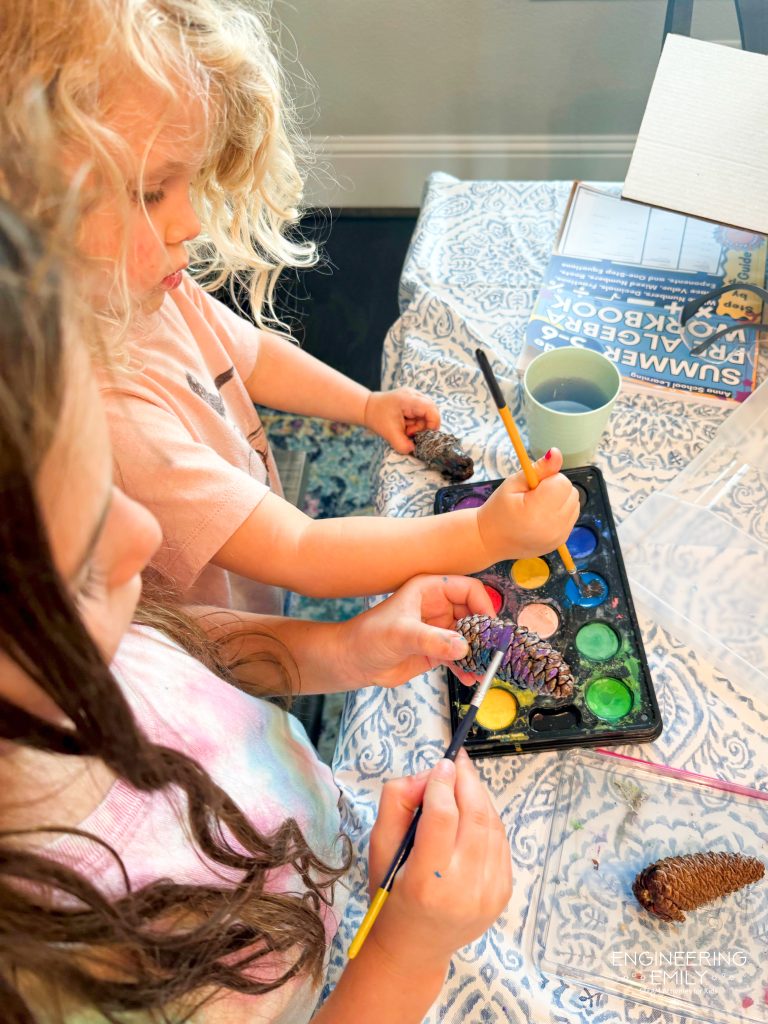
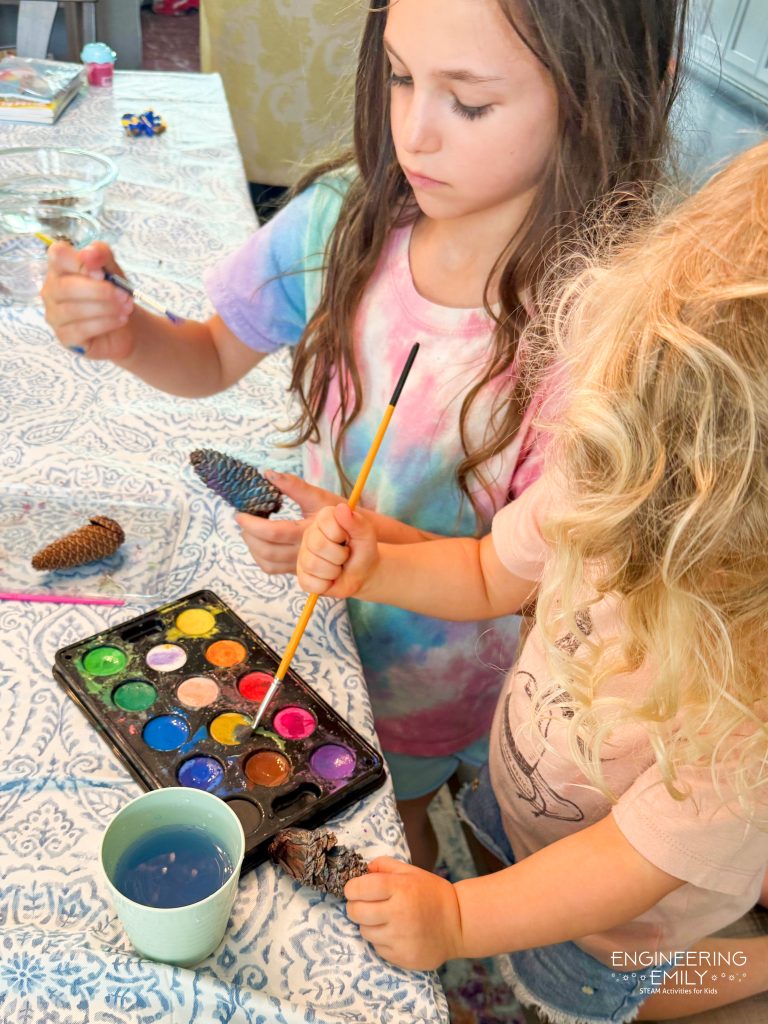
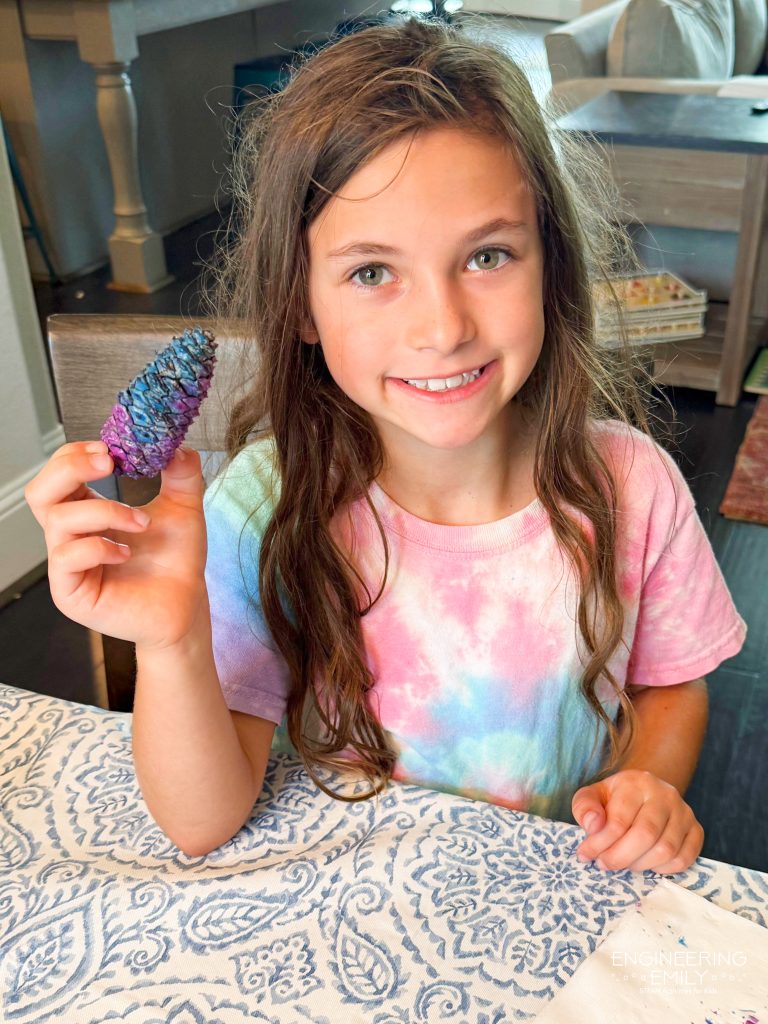
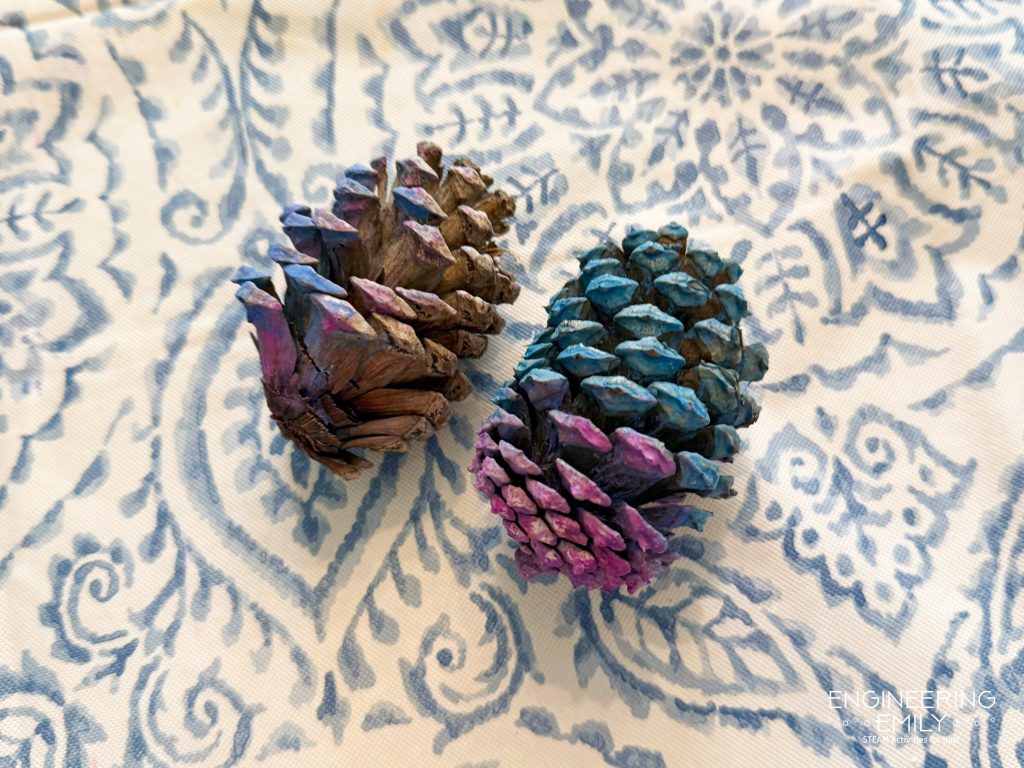
- Let the pinecones dry and they will open back up!
STEAM Concepts Learned:
The first thing you will notice when the pinecone is dropped into water is it floats. Pinecones float in water because they are less dense than water. The pinecone is made of many scales. These scales form air pockets, which increase the pinecone’s buoyancy.
Pinecones carry their tree’s seeds. In order to protect these seeds and save them to be released under the most favorable conditions, pinecones have adapted the ability to open and close to protect the seeds. When the weather is very cold, humid or wet (as we created in this activity), the pinecones will close to protect the seeds. The pinecones will open under dry, mild weather. Under these conditions, the seeds have the best chance to travel further.
How do the pinecones close? Pinecones are made up of many scales. Scales have several layers, but for simplicity, we will assume the scale is made of an inner and outer layer. The inner layer is stiff, and in contrast the outer layer is more flexible, and can absorb water. When the pinecone comes in contact with water (or high humidity), the outer layer will absorb the water and begin to swell. The outer layer expanding quicker than the inner layer causes the scales to curl inward, effectively closing the scales.
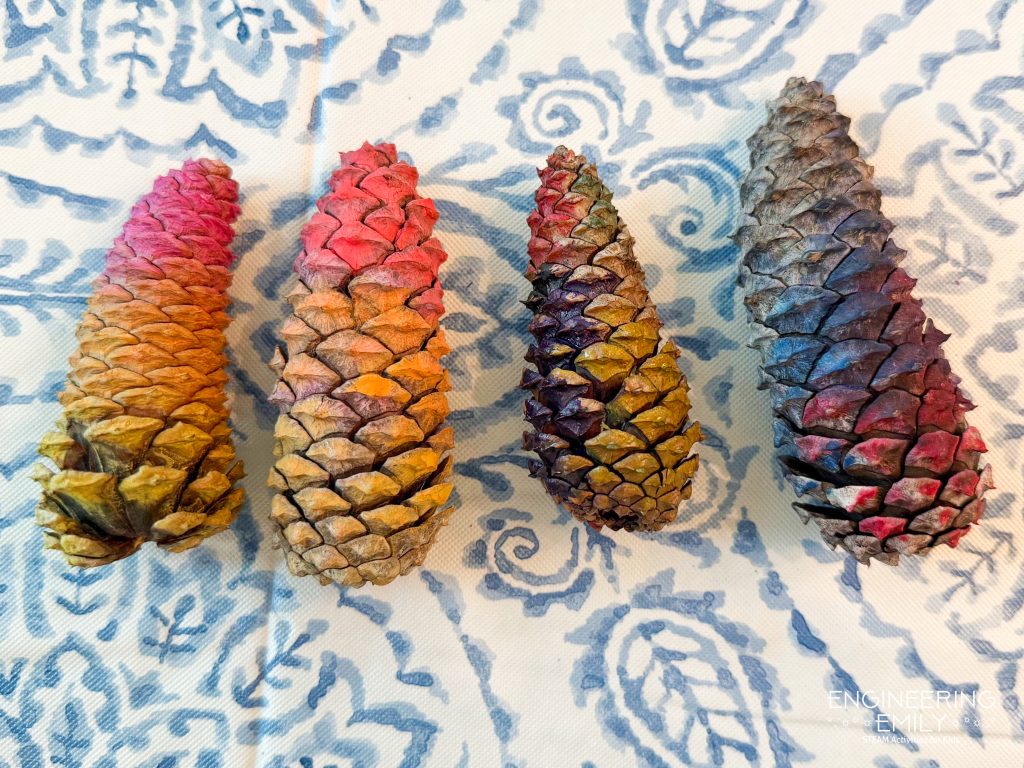
My kids were so surprised to watch the pinecone close in water. All three of them were amazed at how quickly it happened. My daughters’ favorite part of the activity was painting the pinecones. They loved how easy it was to paint the closed pinecones, and the painted pinecones looked beautiful once they dried and opened.
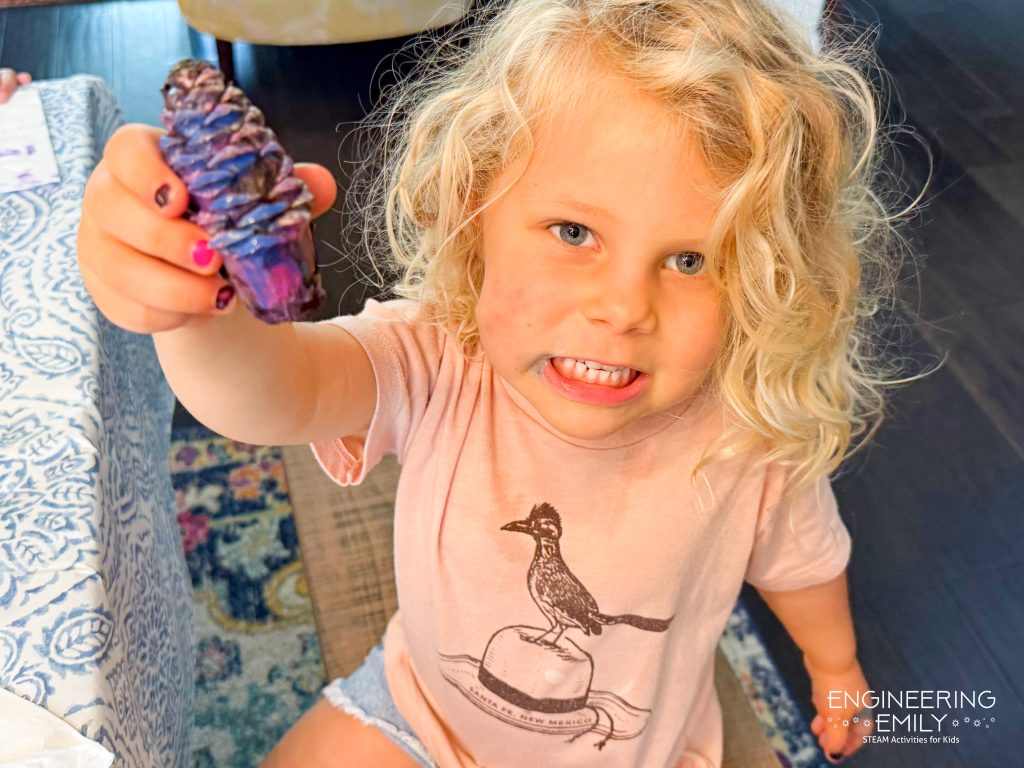
This activity also makes a great playdate idea. We had three friends over for a playdate with my girls, and I did this activity with them. I gave each girl their own pinecone and bowl of water. They dropped the pinecones in and observed them floating, and then they played while the pinecones soaked for 10 minutes. After 10 minutes, the girls all had a blast painting their pinecones together! Everyone loved their painted pinecones and the friends were excited to have the pinecone art to take home. 🙂
We hope you try this activity and let us know it goes for you! Will you try this on your next playdate?