This is another re-share of an awesome activity that was buried in a multi-experiment post that deserved its own moment. I found this activity because I was looking for Valentine’s Day themed experiments to do with my toddler since Valentine’s Day is coming up this week. This activity was part of my post “3 Valentine’s Day themed Baking Soda and Vinegar Experiments for toddlers” from 7 years ago.
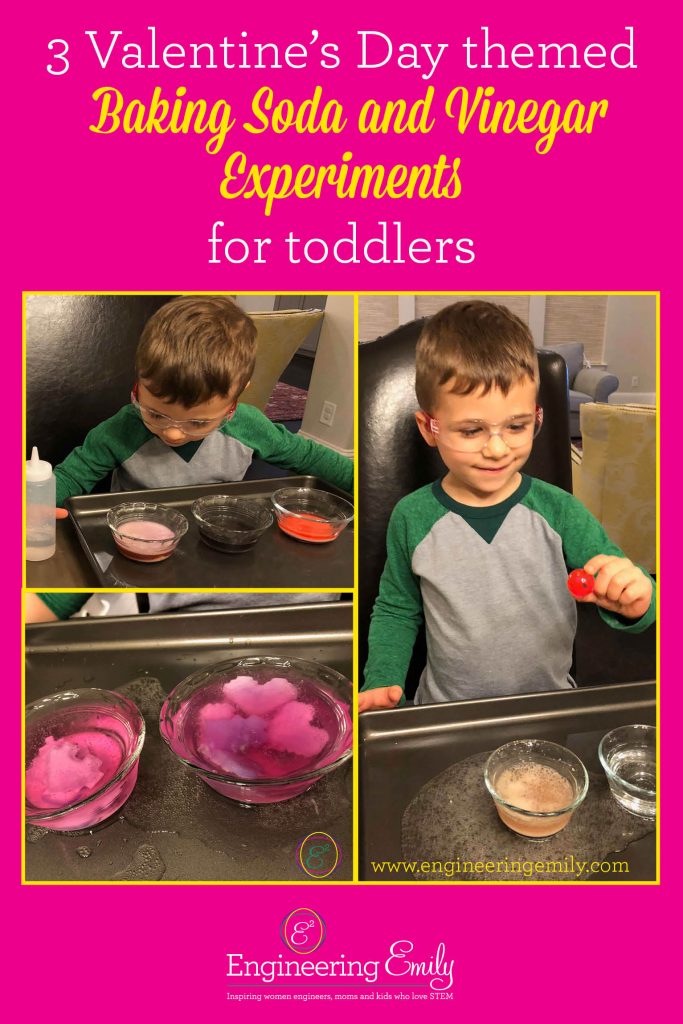
All three experiments in that post were creative and fun for my kids, so I have been sharing them on their own in posts. I have since re-imagined the “foaming ice cubes” activity in the post, “Star Wars Day: Rescue Han Solo | STEAM Activity for Kids.” I re-shared the “foaming hidden colors” activity in another group experiment post, “Summer Fun for Kids: 4 simple indoor & outdoor Rainbow STEM experiments” (I can’t believe I’ve featured it twice, but never on it’s own. I think I might have to put this activity in its own post soon too…stay tuned). Today’s activity was called “foaming rocks with hidden prizes” in the original post.
We also did this activity during my 8 year old’s Science themed birthday party. We hid small fun-shaped erasers in the balls, and this activity was a big hit with the kids, so this activity isn’t just for toddlers!
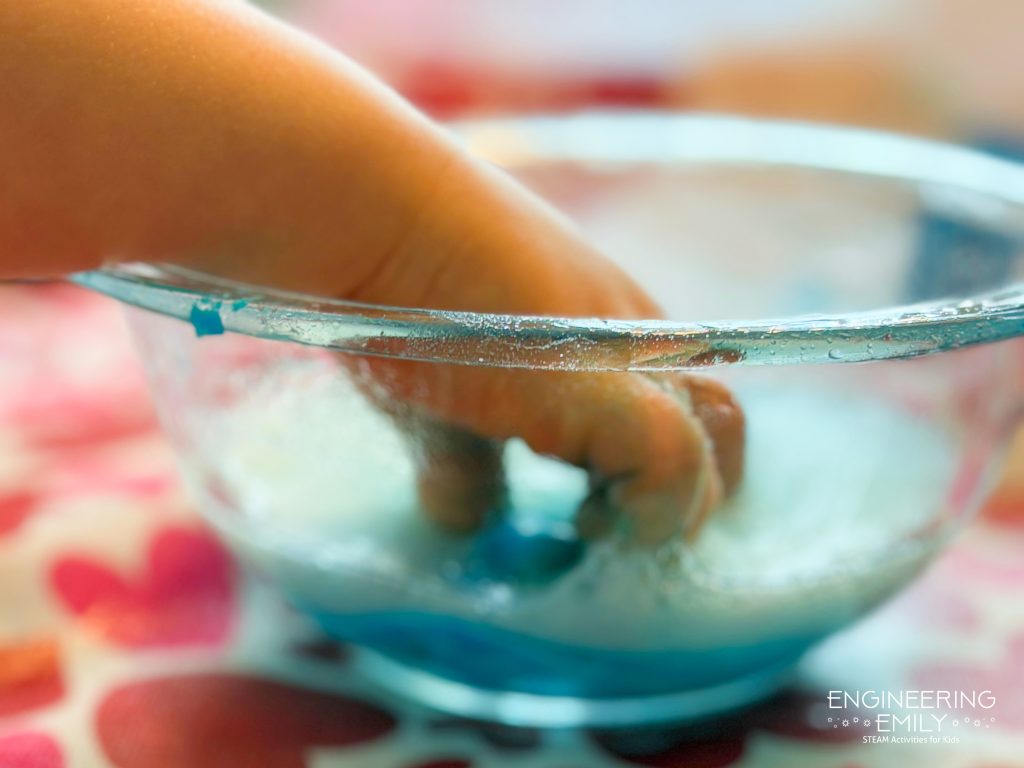
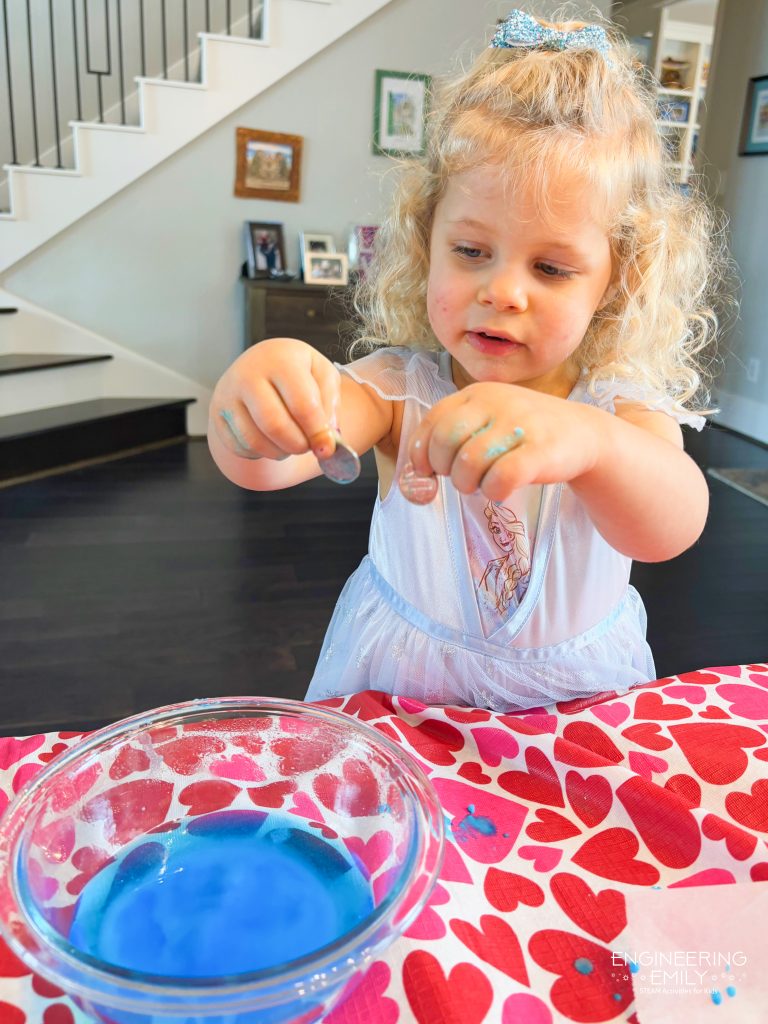
When we did this activity last week, my toddler loved this activity! She helped me prep the baking soda balls and had a blast watching them bubble and foam in the vinegar and looking for the surprise. I hope you try this and enjoy this activity as much as my family has every time we’ve done it: Valentine’s Day, Birthday party and just because. You can save this activity for a special occasion or party, or do it on a rainy day as a fun activity to keep kids busy and entertained.

I posted video instructions for this activity on my @engineering_emily Instagram account. It is a 2 part activity so I made a separate reel for each part. You can view both videos below:
Make a Chemical Reaction to Reveal a hidden surprise
This activity has an exciting chemical reaction that reveals a hidden surprise! Kids will have fun watching a chemical reaction when they drop a baking soda ball into a cup of vinegar, and once the bubbles end, they will find a special surprise in the cup! This activity is recommended for children ages 3+.
Safety:
A chemical reaction occurs in this activity which creates CO2 bubbles. If the bubbles splash into eyes, immediately flush them with water until no longer irritated. To prevent this, don’t observe the reaction too closely, and/or wear eye protection. There is a chocking hazard from the small hidden items. Instruct the child not to put anything from this activity into their mouths.
Food coloring can stain clothing, furniture, and skin. Protect your work surfaces by covering them, and wear clothes you don’t mind getting wet and/or stained or wear an apron.
Materials:
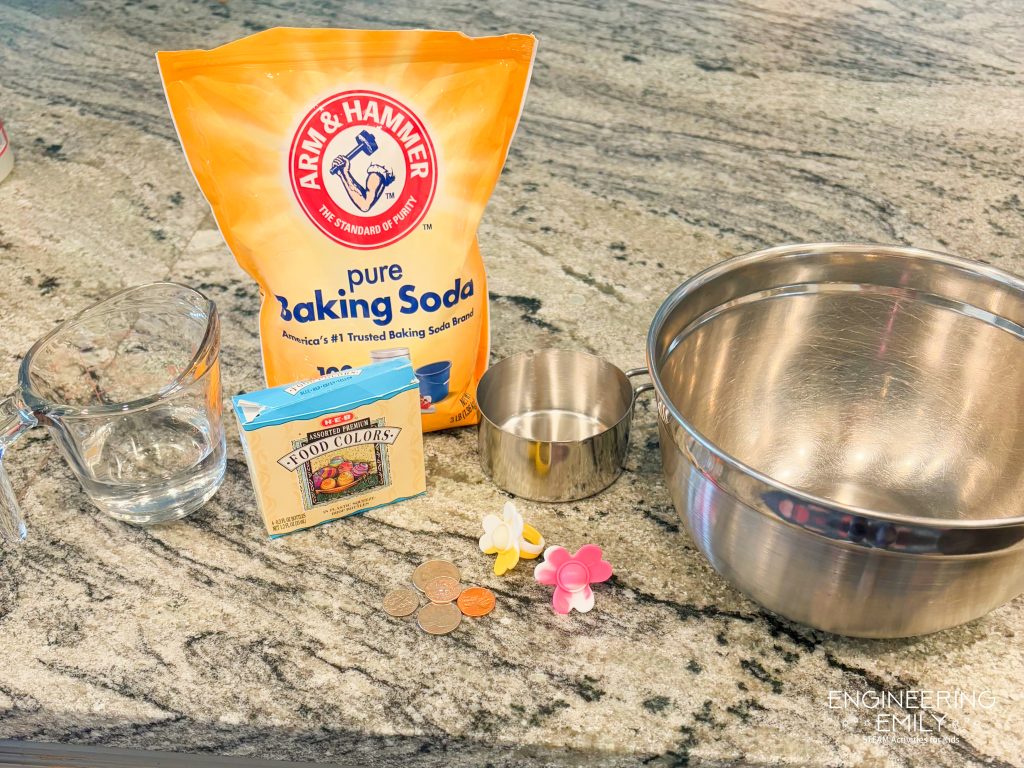
- 1 Cup baking soda
- 1/3 Cup water
- Food coloring
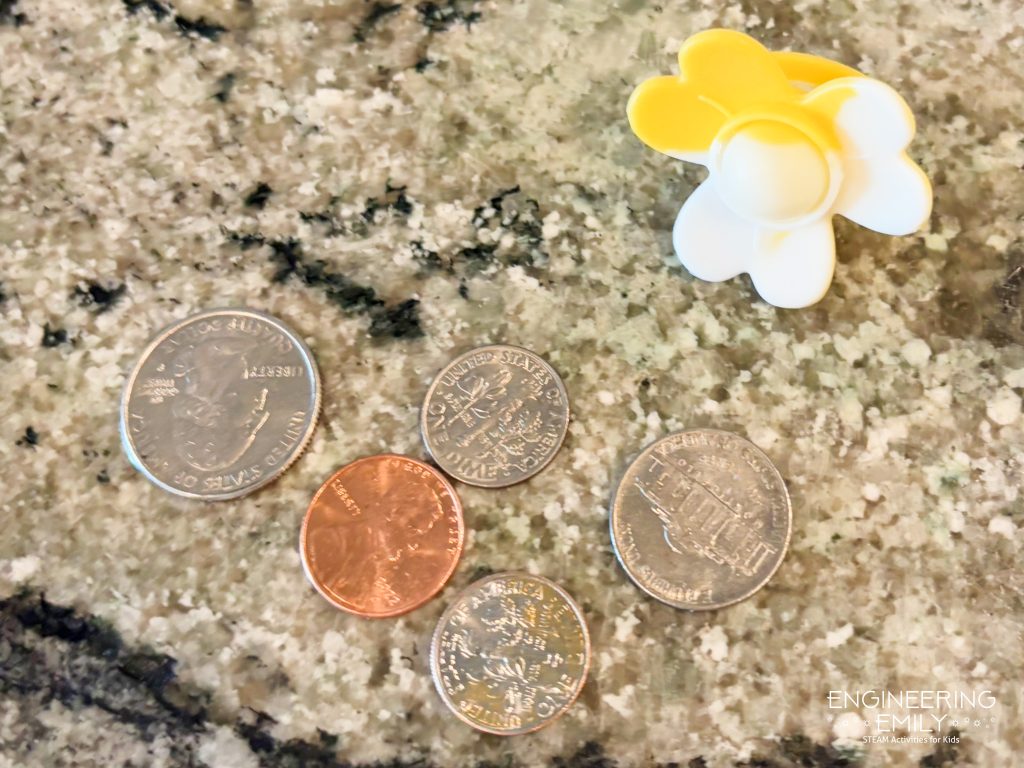
- Small gift item – this is the “surprise” (examples of items we have use are: bouncy balls, coins, toy rings, gems or rocks, small fun-shaped erasers)
- Parchment paper or flat baking tray
- Medium sized bowl or large cup
- Vinegar
Procedure:
Notes: The first time you do this activity prepare steps 1-4 in Part 1 without the child, so the gift reveal will be a surprise. If they enjoyed the activity, you can do it again and let them help with steps 1-4, so they can practice measuring and have fun molding the balls. This recipe makes around 6-8 golf ball sized balls. The procedure is separated into 2 parts because you have to prepare the balls and let them dry in Part 1, and then you move on to the chemical reaction and surprise reveal in Part 2.
Part 1: Make the Baking Soda Balls with a Hidden Surprise
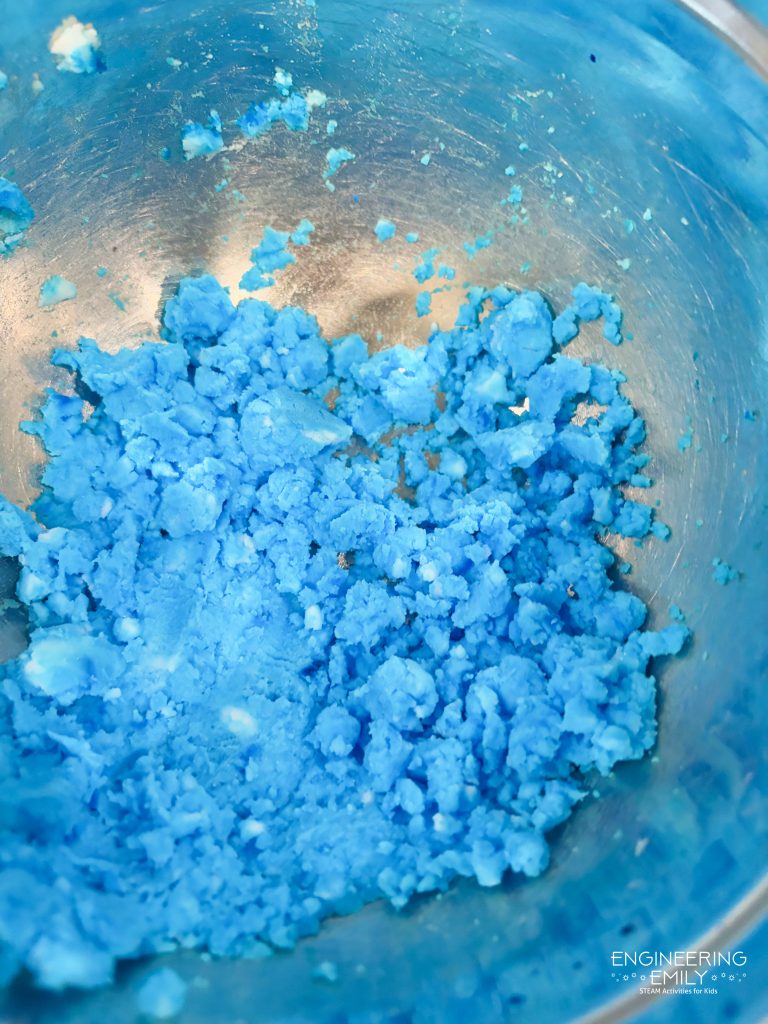
- Measure 1 cup baking soda, 1/3 cup water, and food coloring (optional), and combine in a large bowl.
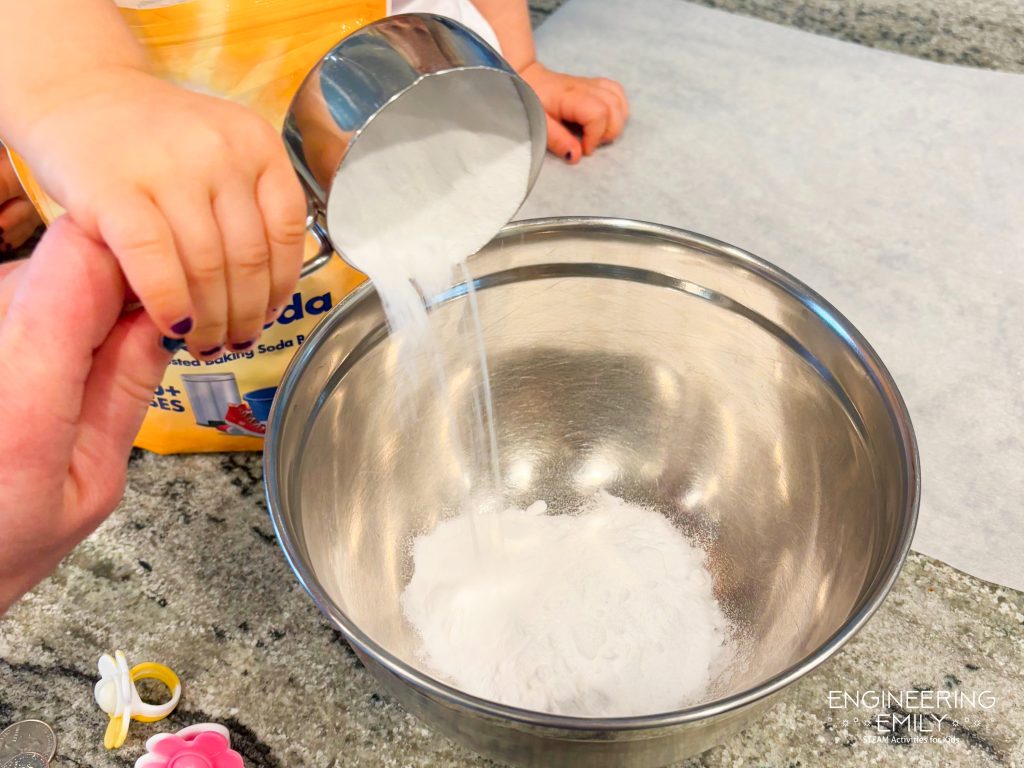
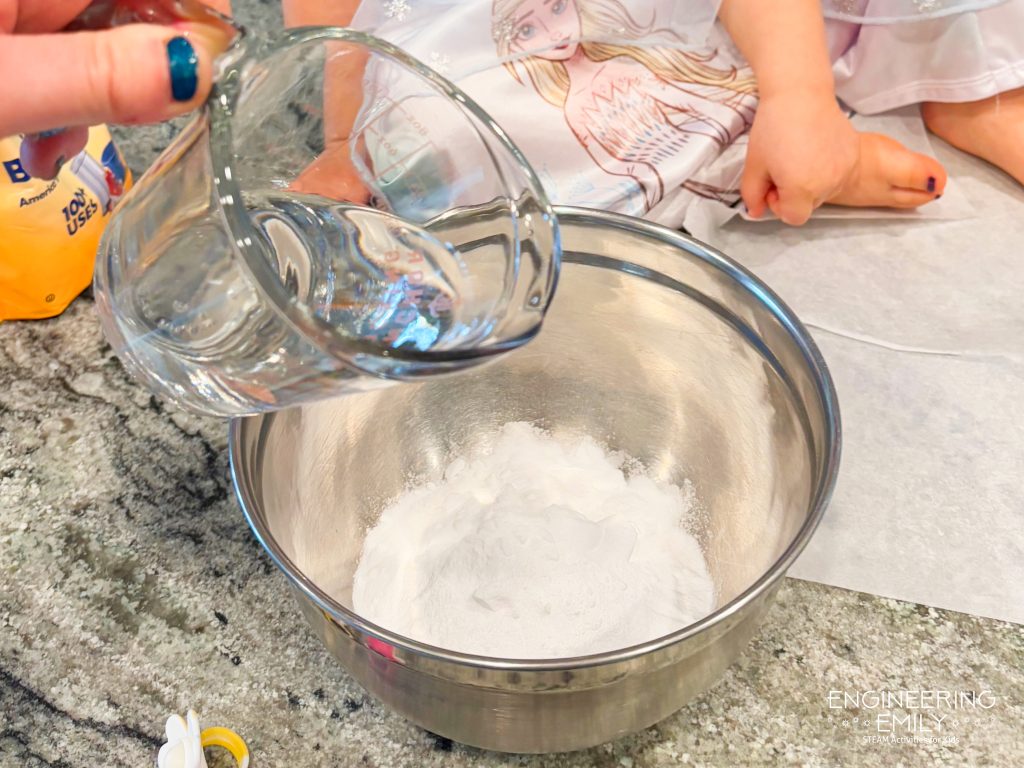
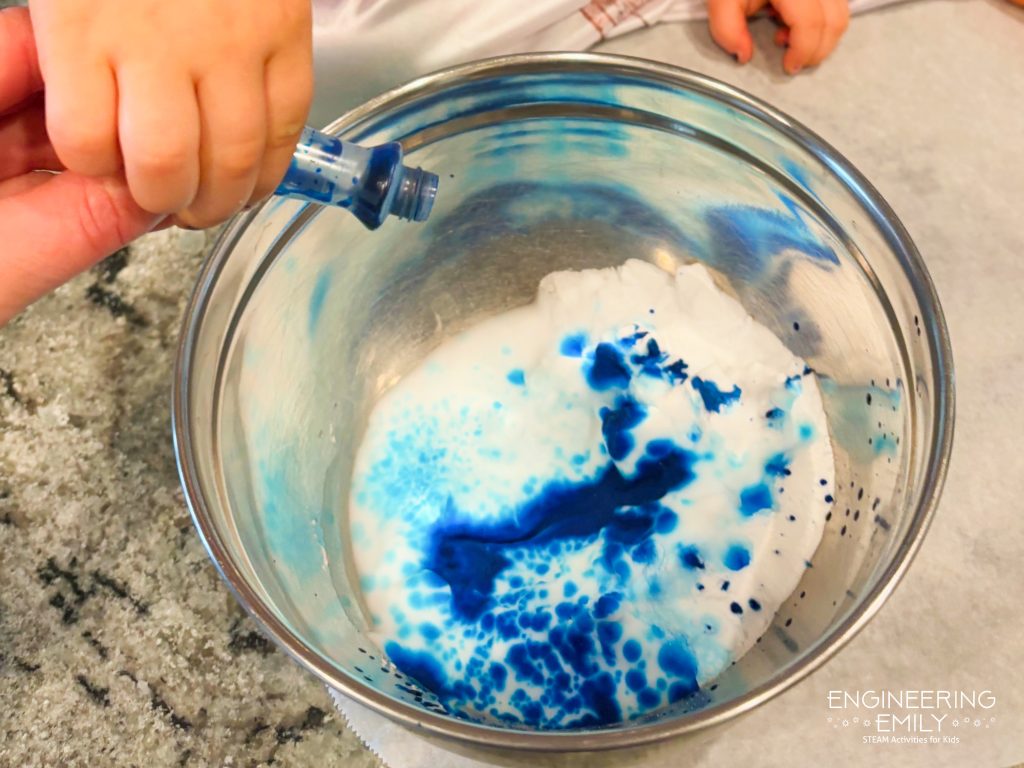
- Mix the ingredients together with a spoon or your hands until a thick moldable dough forms. Add more baking soda if it’s too wet or more water if it’s too dry.
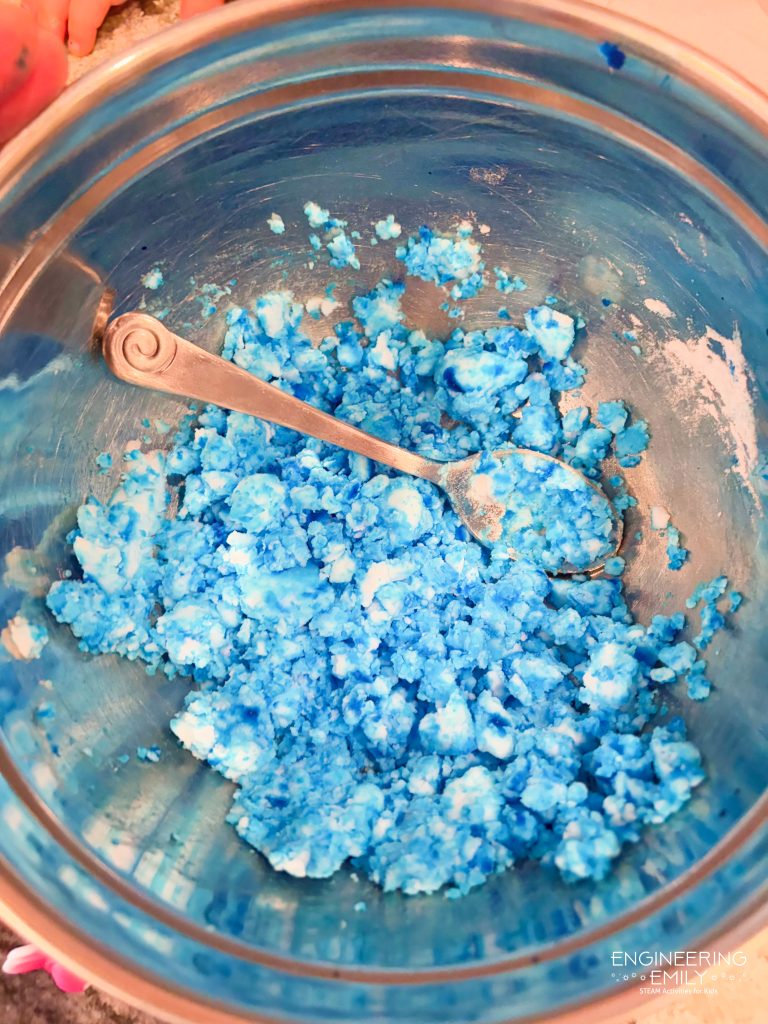
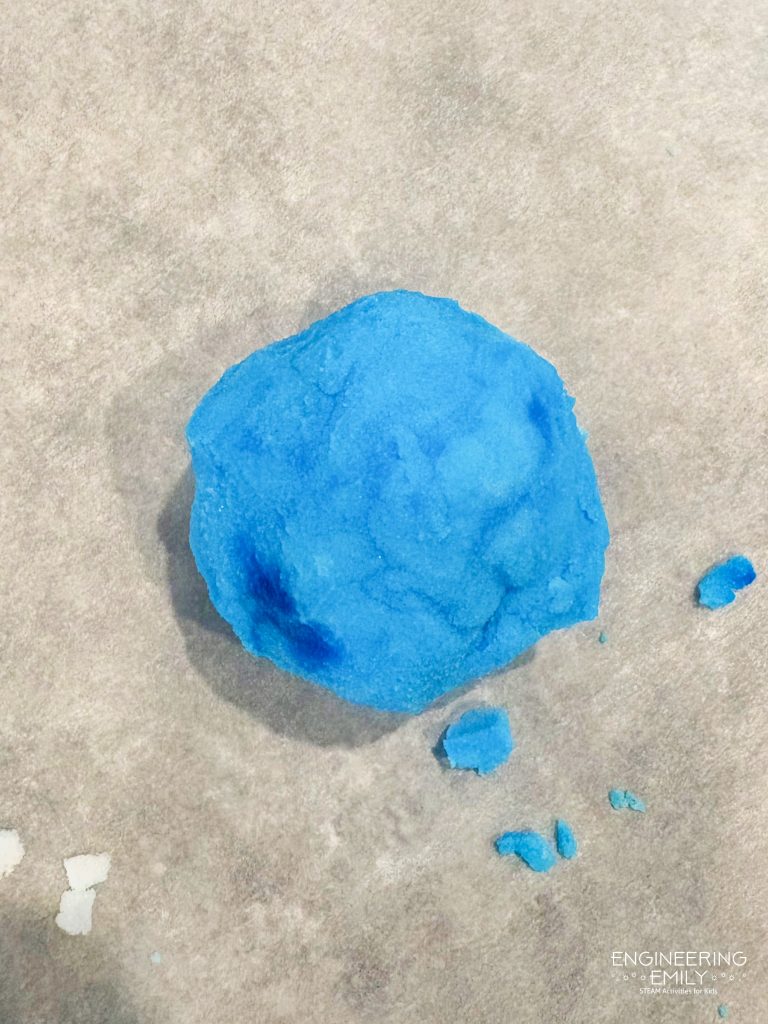
- Put a golf ball sized piece of dough in your hand and make a well in the center. Place the surprise into the well in the dough, and then mold the dough into a ball shape around the surprise. Repeat to use all the dough and surprises.
Note: These balls will crumble easily so use care when handling them.

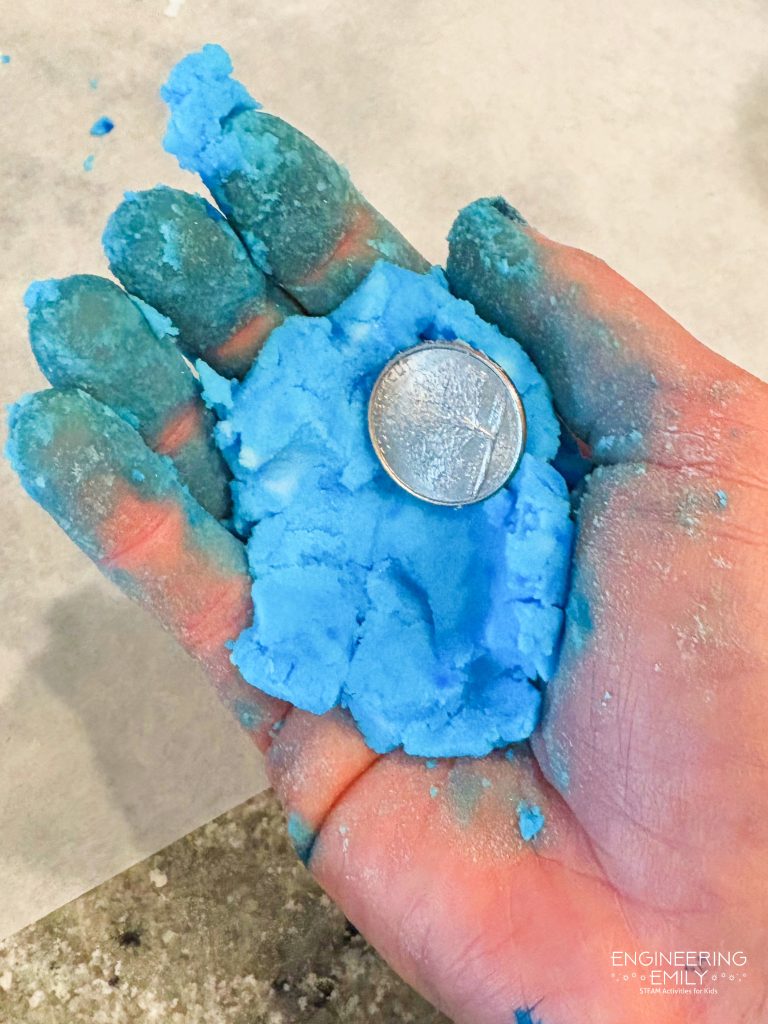
*If you use food coloring this step will dye your hands. I learned from experience that it will come off after a couple good hand washes. 😉 If you don’t want to have colored hands, either use gloves for this step, or don’t use food coloring. The balls will be white and you can call them snowballs!
- Place the balls on parchment paper or a flat baking tray to dry at least an hour and up to overnight.
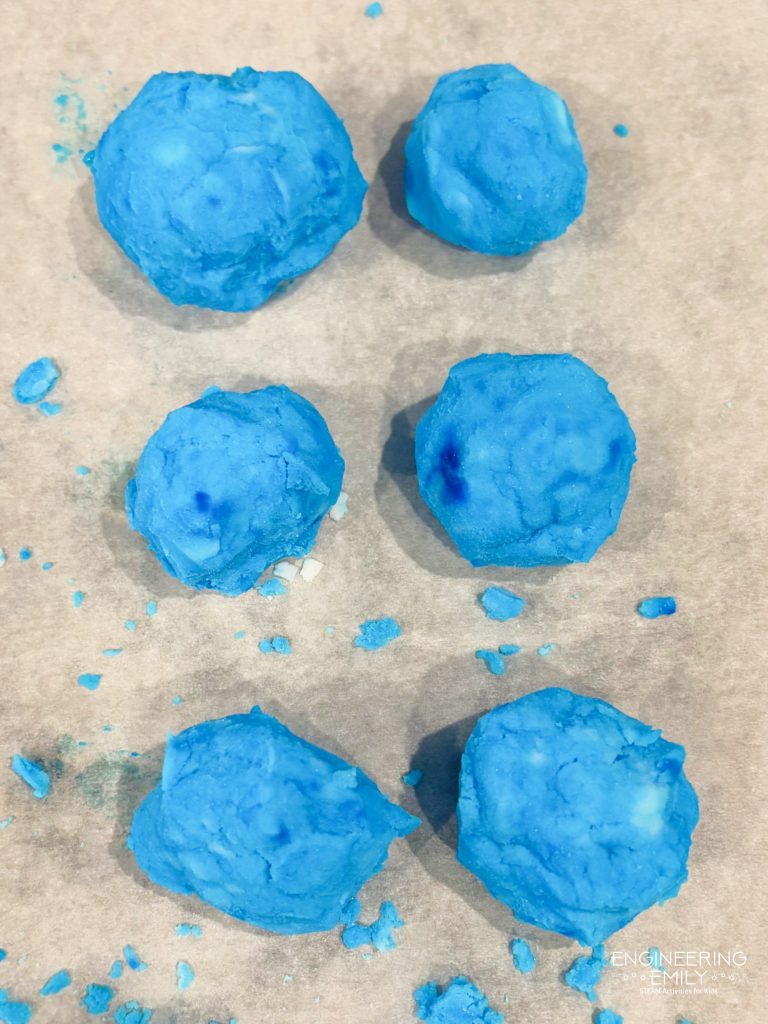
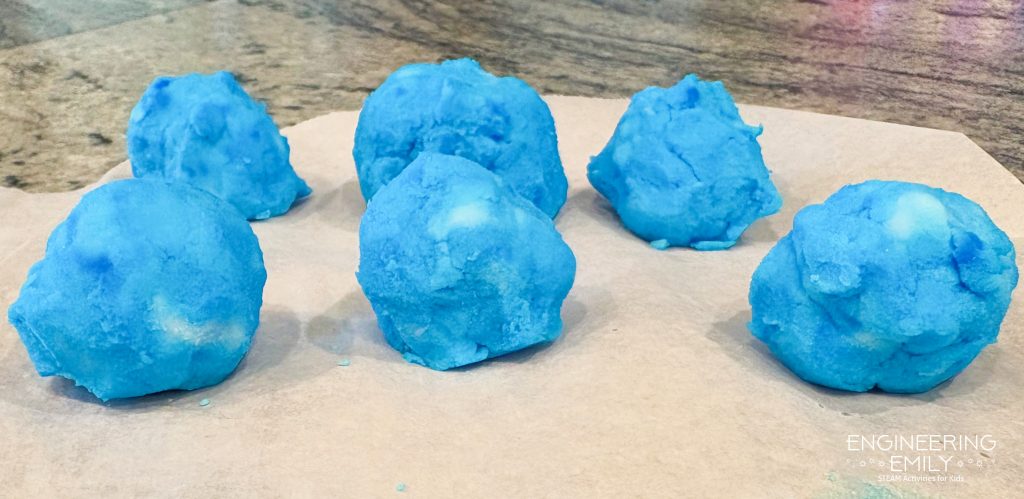
Part 2: Chemical Reaction to Reveal the Hidden Surprise
- Once the baking soda balls are dry, gather the balls, a bowl, and vinegar on a table.
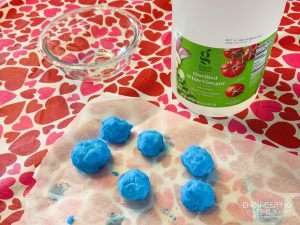
- Fill a bowl or cup about 1/3 full with vinegar.
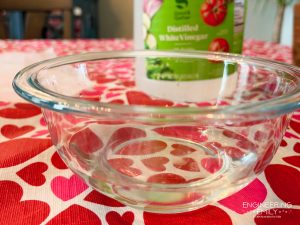
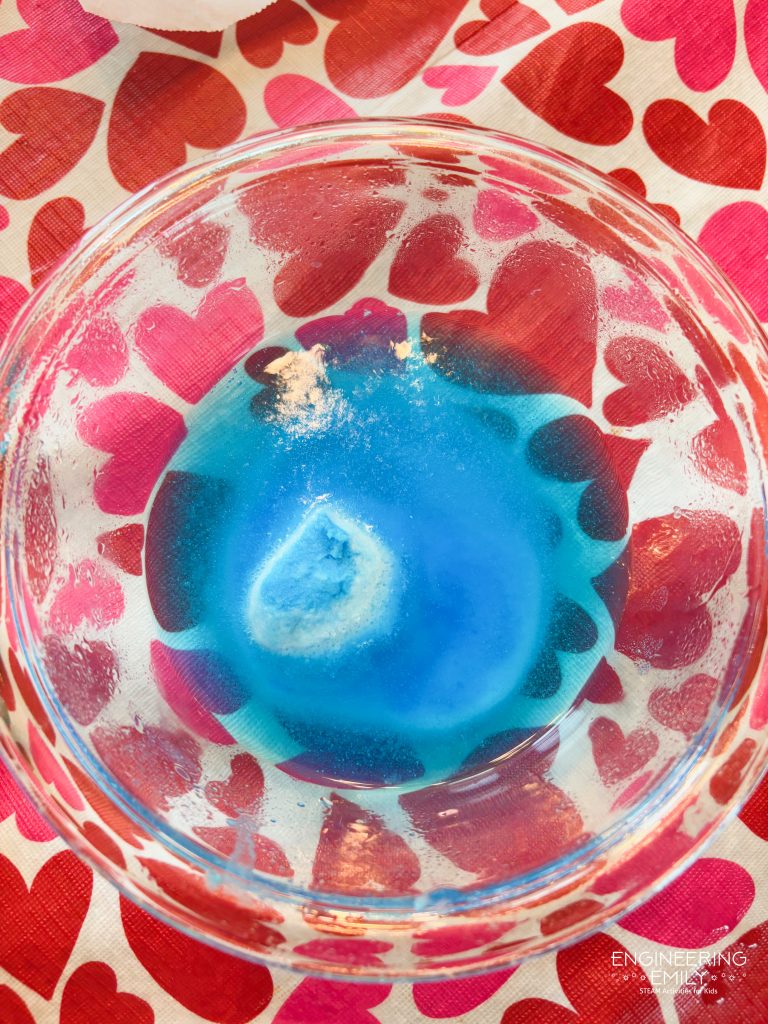
- Give the child a baking soda ball and have them drop the ball into the vinegar-filled bowl or cup. They will watch bubbles and foam erupt due to the chemical reaction.
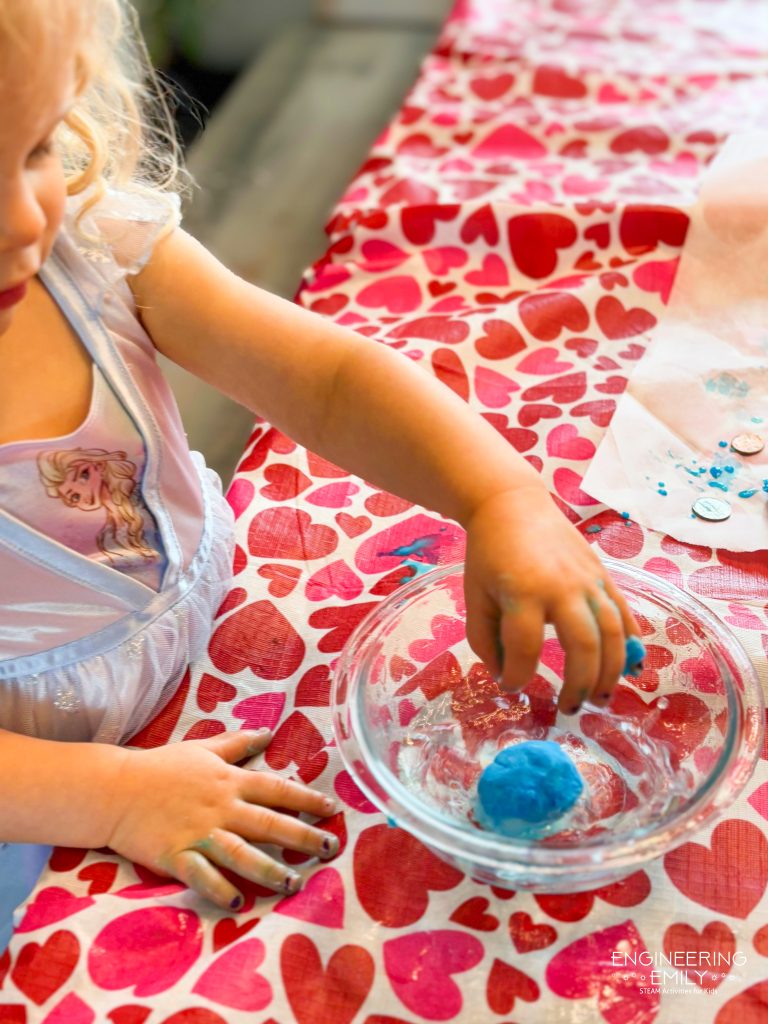
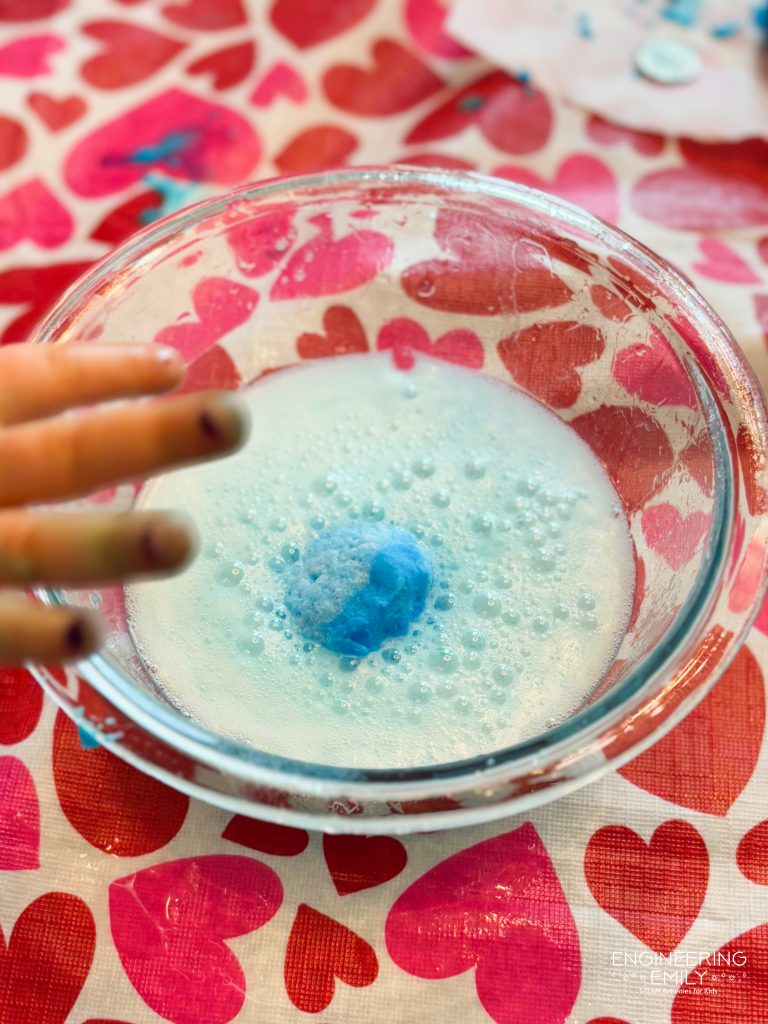
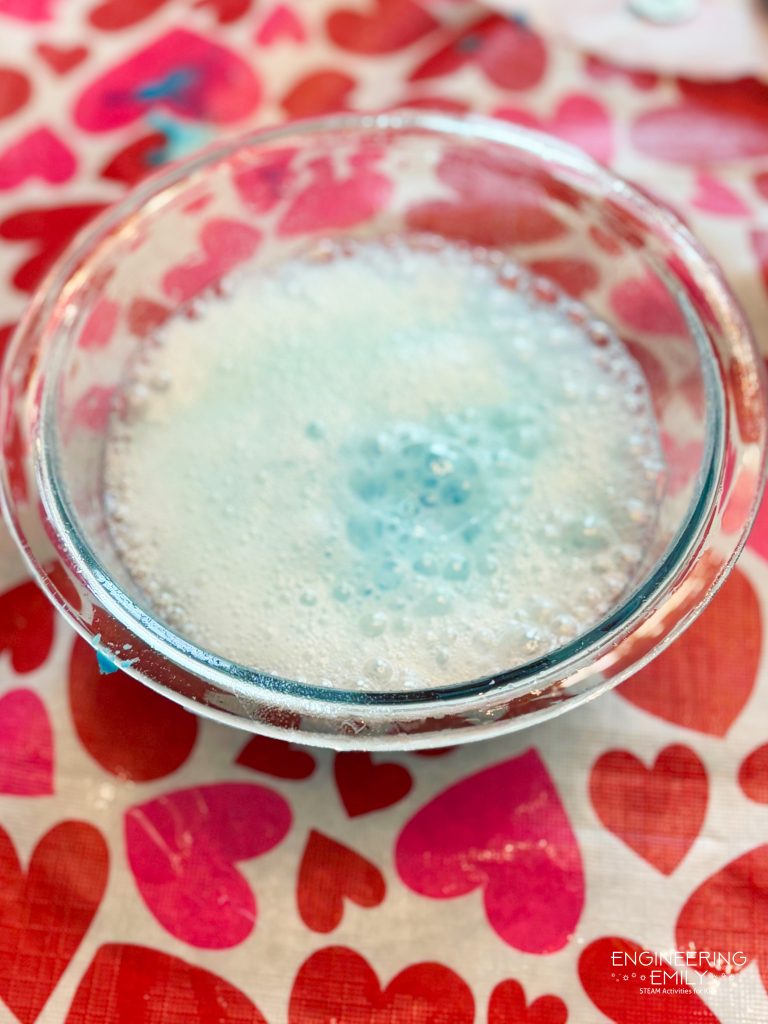
- When the bubbles clear, the child will see the hidden surprise revealed in the bowl.
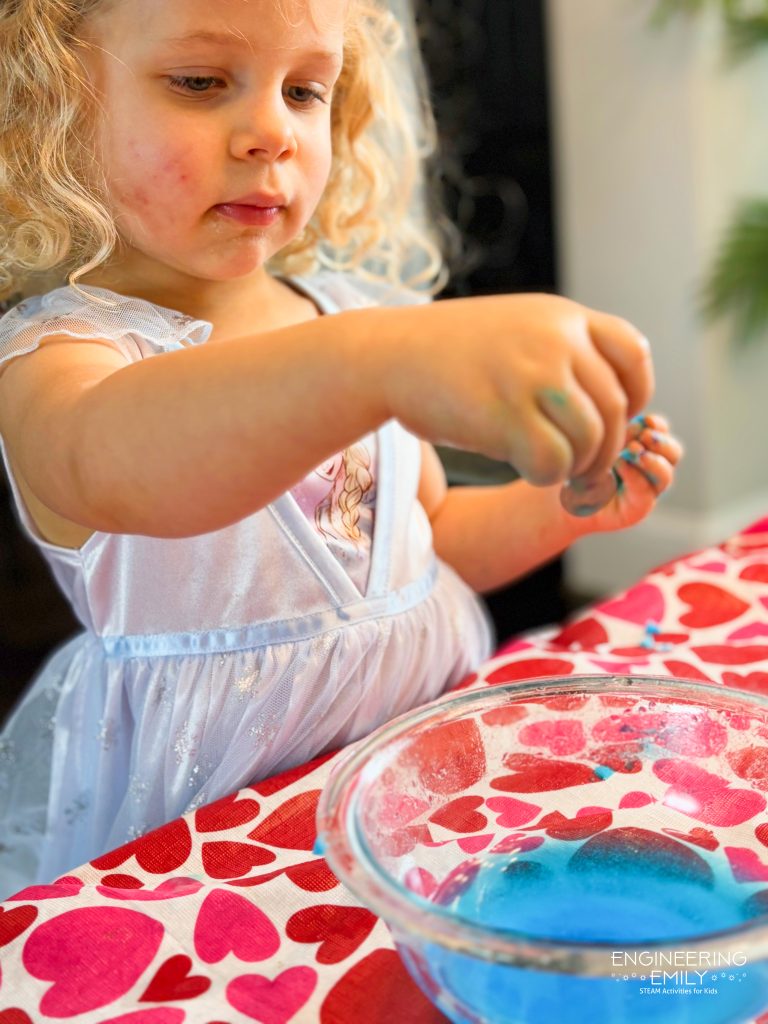
- Repeat steps 6-8 with all the balls. You will need to empty the bowl and use fresh vinegar each time to create the chemical reaction. If you add the ball to the used liquid from the previous ball, the chemical reaction won’t start. You can also add more vinegar and it will get the chemical reaction started again.
STEAM Concepts Learned:
The baking soda and water do not react with each other because the baking soda is a base and water is neutral. They create a dough because of the combination of liquid and solid. The dough will harden as it dries because the water evaporates.
When the baking soda balls are dropped into the vinegar, a chemical reaction takes place that releases carbon dioxide (CO2) gas. This CO2 gas creates bubbles/foam/fizz. The balls are quickly dissolved in the chemical reaction and when the bubbles clear the surprise is revealed.

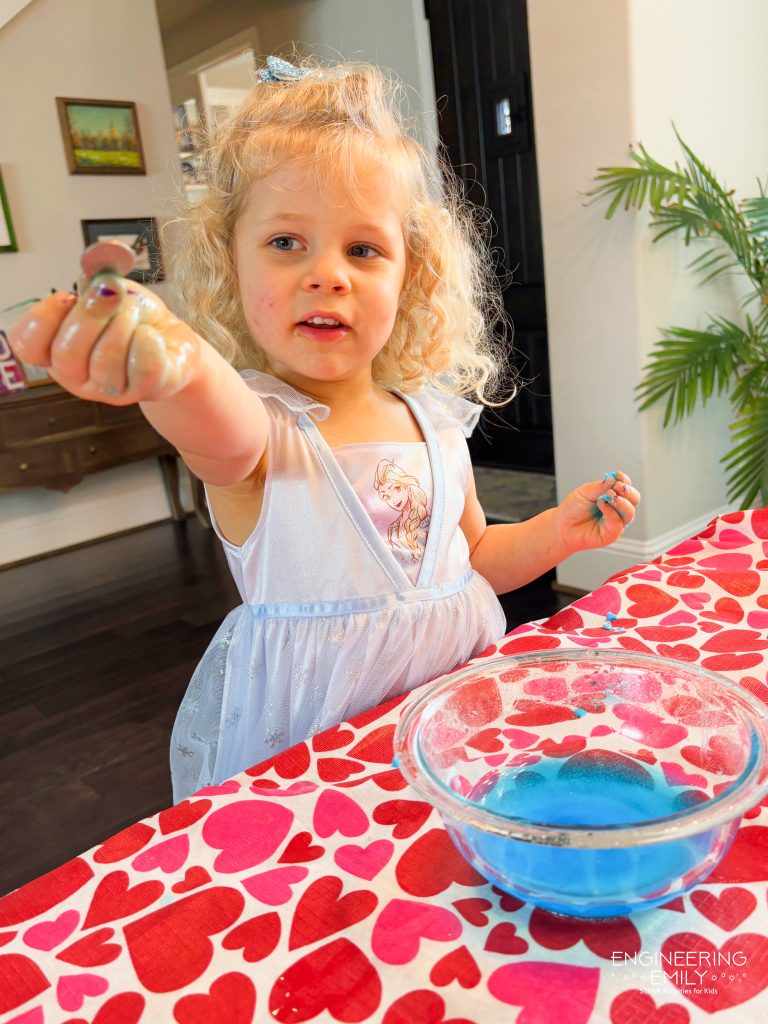
My kids all loved this activity as toddlers (see my son as a toddler doing the same activity in the photo above). This was also a hit with older kids at my daughter’s birthday party, so it’s great for kids of all ages. I think most kids will get excited about finding a hidden surprise (even if it’s as simple as a penny). We noticed once we washed off the coins and dried them after the activity that the coins were all very shiny and clean looking. It reminded me of our penny cleaning experiment I shared a few years ago! So we actually did 2 activities in one! 😉
Are you going to try this fun activity? You can also find it in two of the printable STEAM Activities for Kids packs: Birthday Party STEAM Activities for Kids and Chemical Reaction STEAM Activities for Kids. These packs are so handy because you have the experiment in your hand (you can print it or view the pdf on your device) anytime, anywhere, without the ads, you don’t have to read all the fluff, you can skip the pictures, and get straight to the steps of the activity.

Birthday Party STEAM Activities for Kids
If you are planning a STEM, STEAM or Science-themed birthday party then this collection of 8 birthday party STEAM experiments and activities for kids is perfect for you! This is a curated list of 8 activities that are a mix of hands-on and adult demonstrations that are all entertaining for groups. This pack gives you all the information you need to plan the perfect science birthday party.
This printable pack includes a table of contents, an introduction with information about Engineering Emily, an explanation of the meaning of STEAM, what to expect in each activity printable, tips for success, and an overview of the birthday party activities, followed by 8 two- or three-page exciting birthday party friendly activities for kids. Get ready to celebrate with science!

Chemical Reaction STEAM Activities for Kids
A collection of 16 chemical reaction themed STEAM experiments and activities for kids. These include the most popular STEAM for kids activities on the Engineering Emily blog. This printable pack includes a table of contents, an introduction with information about Engineering Emily, an explanation of the meaning of STEAM, what to expect in each activity printable, tips for success, and an overview of the chemical reaction activities, followed by 15 two- or three-page exciting chemical reaction themed activities for kids. Get ready for explosive fun!