This is a great snack time activity for toddlers – all you need is a the citrus fruit (we used a mandarin orange) and a glass of water. They will learn about the concepts of sink or float and buoyancy, all while getting to eat a delicious and healthy snack of mandarin oranges. My 3 year old eats mandarin oranges almost every day, so when I came across this activity on Pinterest, I knew we had to try it out and make it our own.
In this activity we test whether the mandarin orange will sink or float unpeeled, and then try again when it’s peeled. We had so much fun with the mandarin orange that we decided to expand the experiment to see if this works for other citrus fruit, and tested the activity with a lemon as well.

Watch the Activity:
I’ve posted videos of this activity on both YouTube and Instagram. Both videos are embedded below for you to watch and follow along as we do this activity.
YouTube video (subscribe to my channel to never miss a new STEAM Activity video):
Instagram reel (follow my account to learn more about our day to day life and see posts and videos):
Overview:
This is a great activity to teach kids about density, buoyancy, and to make a hypothesis on sink or float using the popular snack: mandarin oranges. It’s so easy to set up and perform – all you need is an orange (or any citrus fruit) and a glass of water! This activity is recommend for children ages 3+.

Materials:
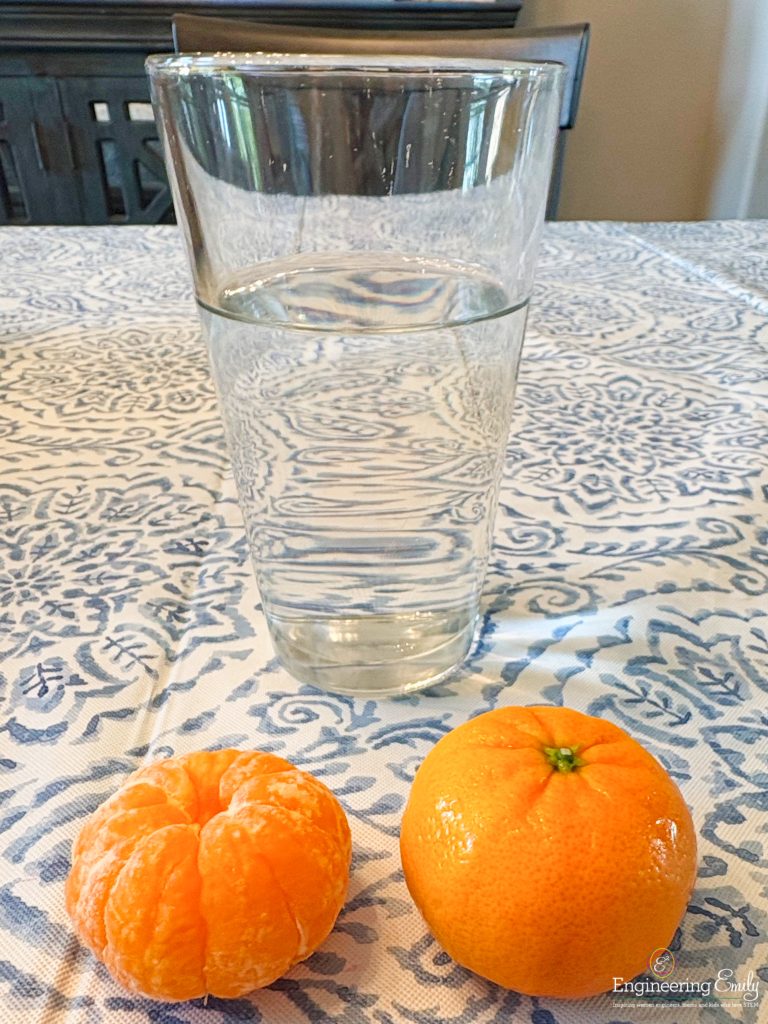
- Mandarin orange (this is recommended because they are easy to peel, and will easily fit into a glass, but any citrus fruit: orange, lemon, lime, grapefruit, etc will work for this activity).
- Clear drinking glass or jar
- Water
Safety:
There is a high likelihood of water spills in this activity. Protect your surface from water by using a non-porous table covering.
Have towels on-hand to clean up spills to prevent slips and falls.
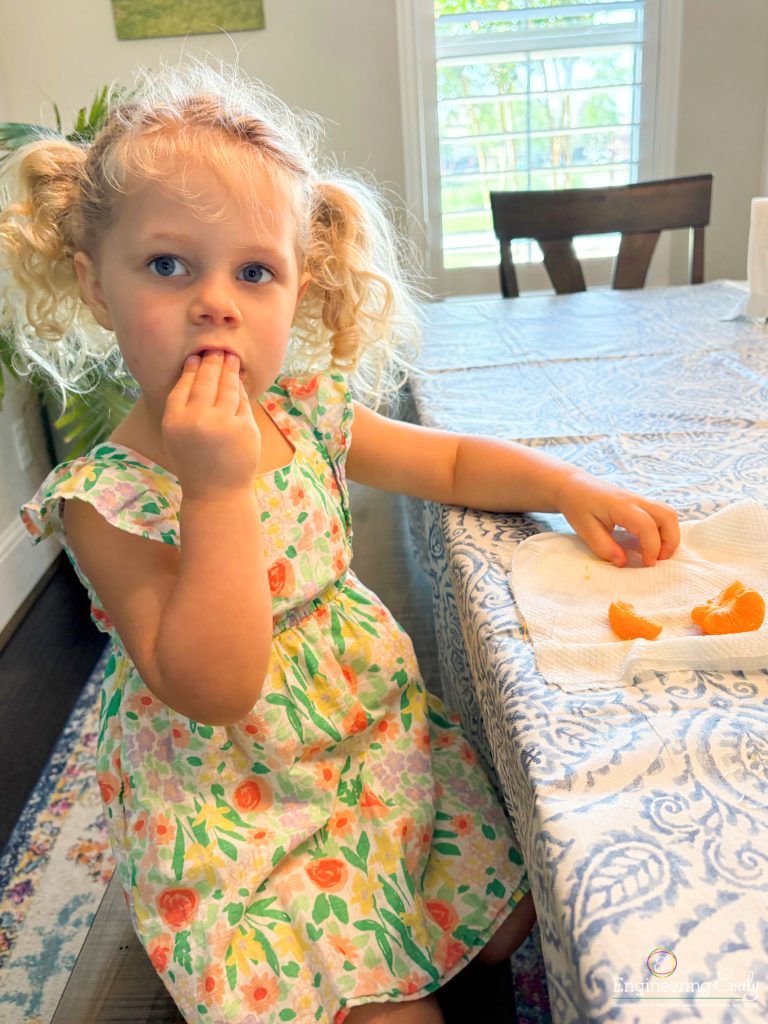
Since the oranges are just placed in water in this activity, it’s ok to eat them after the activity is finished. Always keep an eye on young kids while eating foods like orange. Make sure they thoroughly chew their food and watch them for signs of choking while eating.
Procedure:
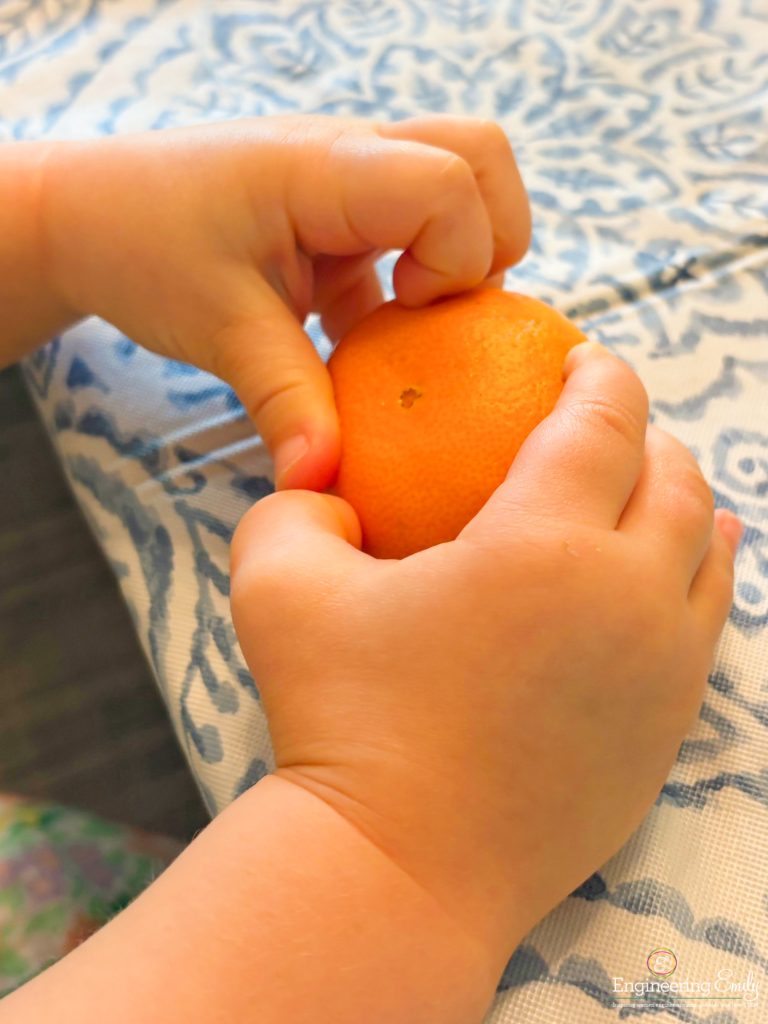
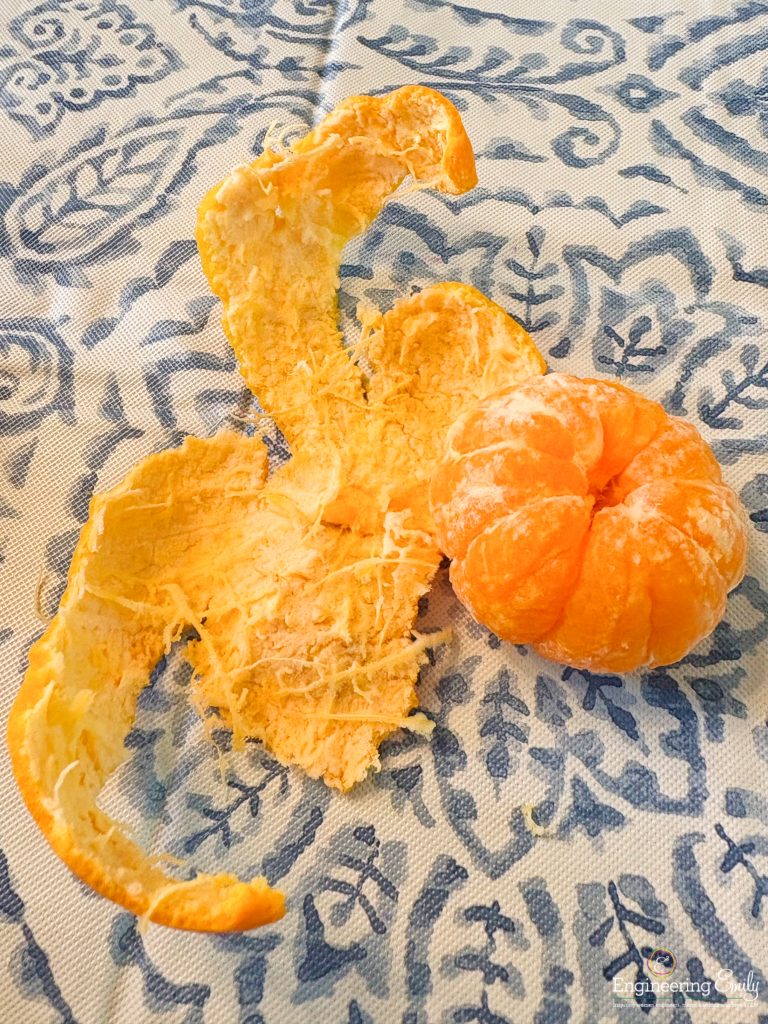
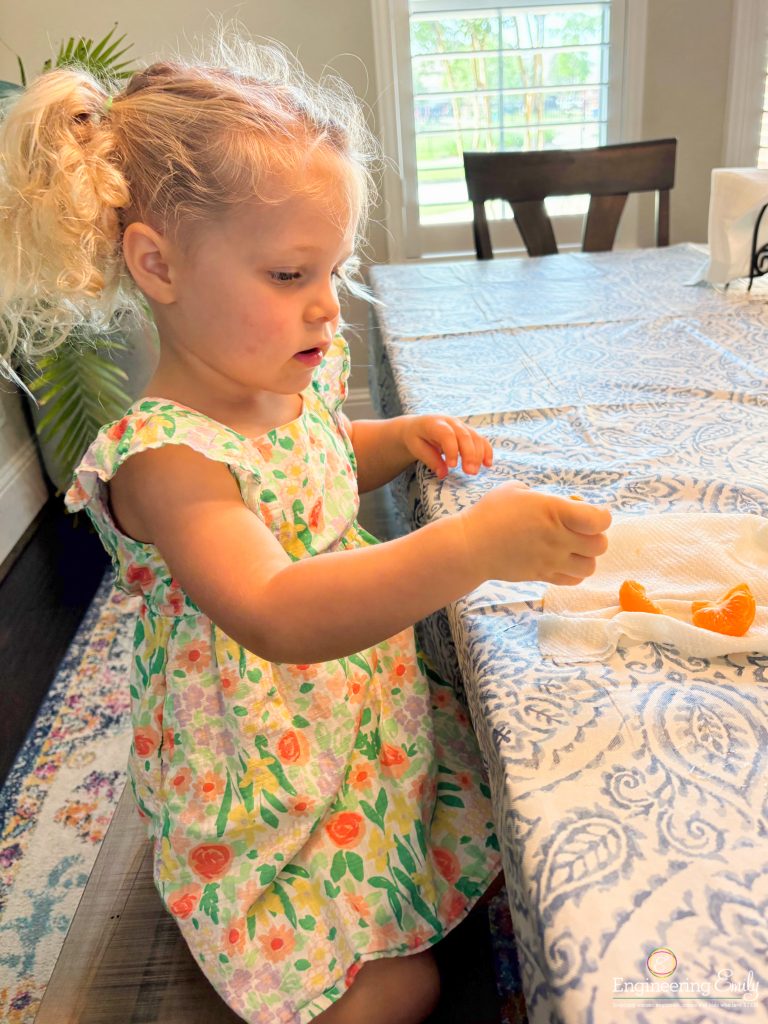
- Peel an orange (or any citrus fruit), set aside next to an unpeeled orange.
- Fill a glass about 1/2 full with water.

- Hold up the two oranges (one peeled, one unpeeled) and ask the child if they think each orange will sink or float and why?
- Ask the child to gently drop the peeled orange into the glass of water.
- Did it sink or float?
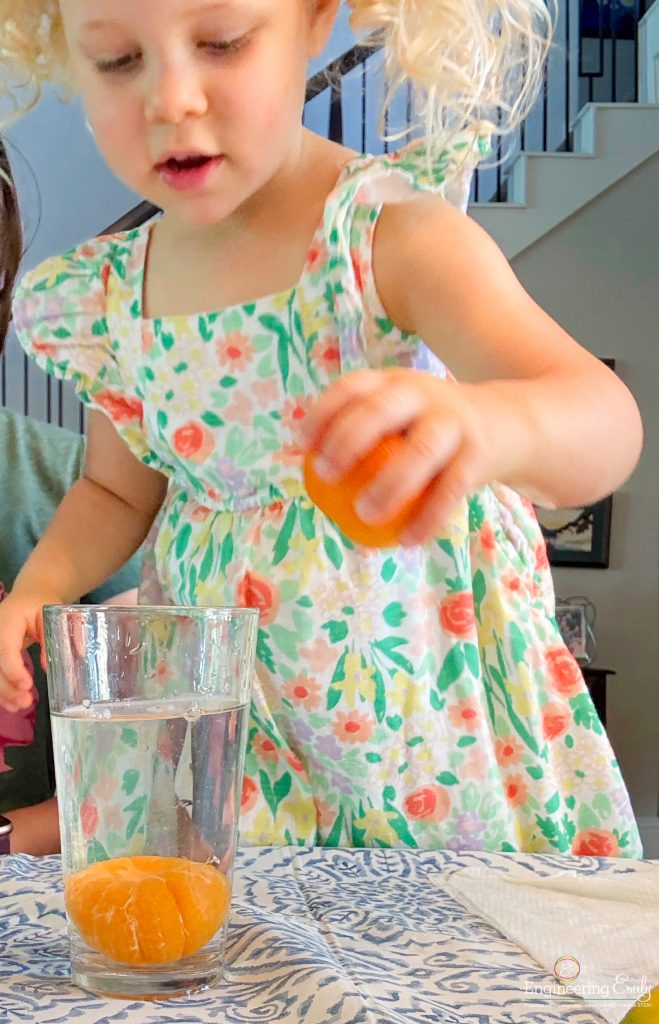
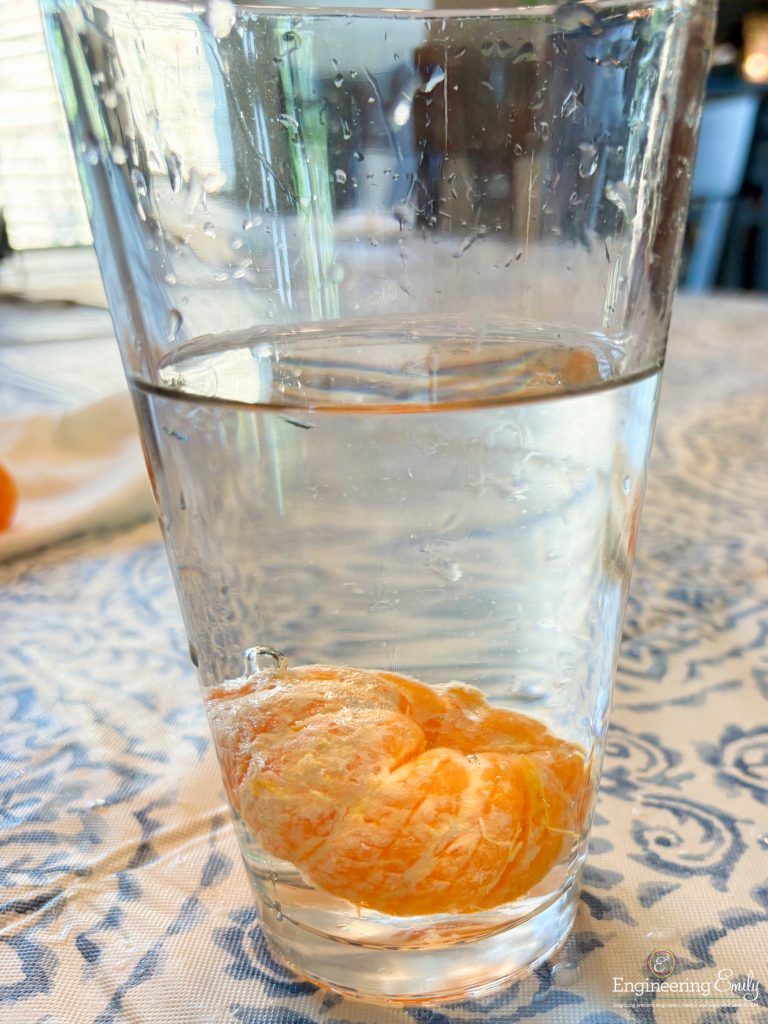
- Ask the child to gently drop the unpeeled orange into the glass of water.
- Did it sink or float?
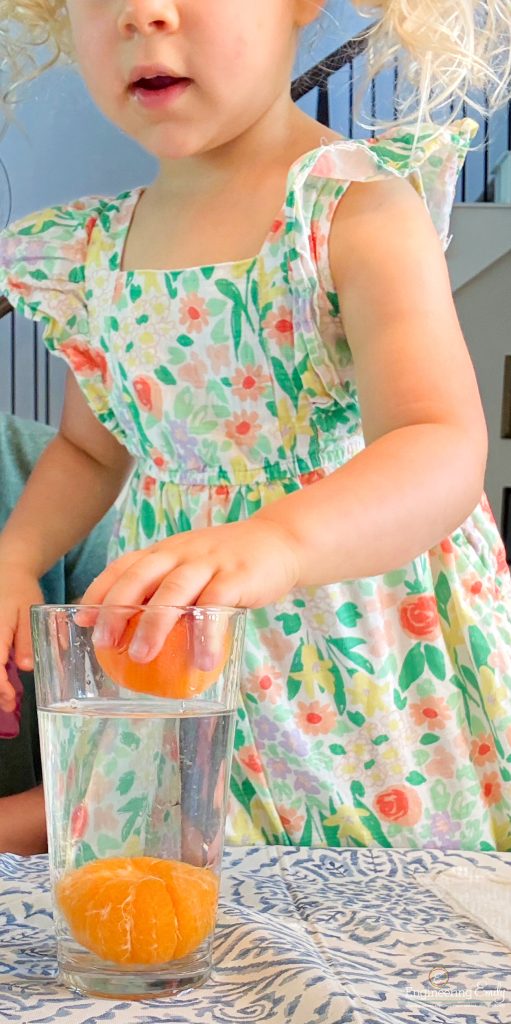
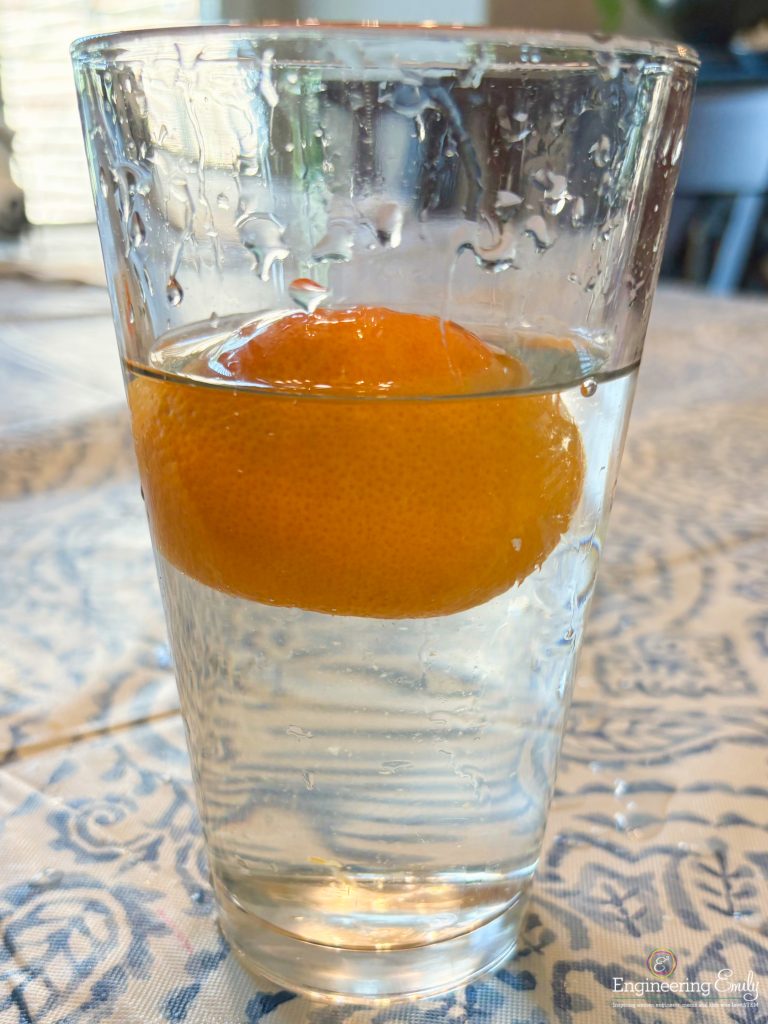
- Remove the oranges and drop just the orange peel into the water to see it float.
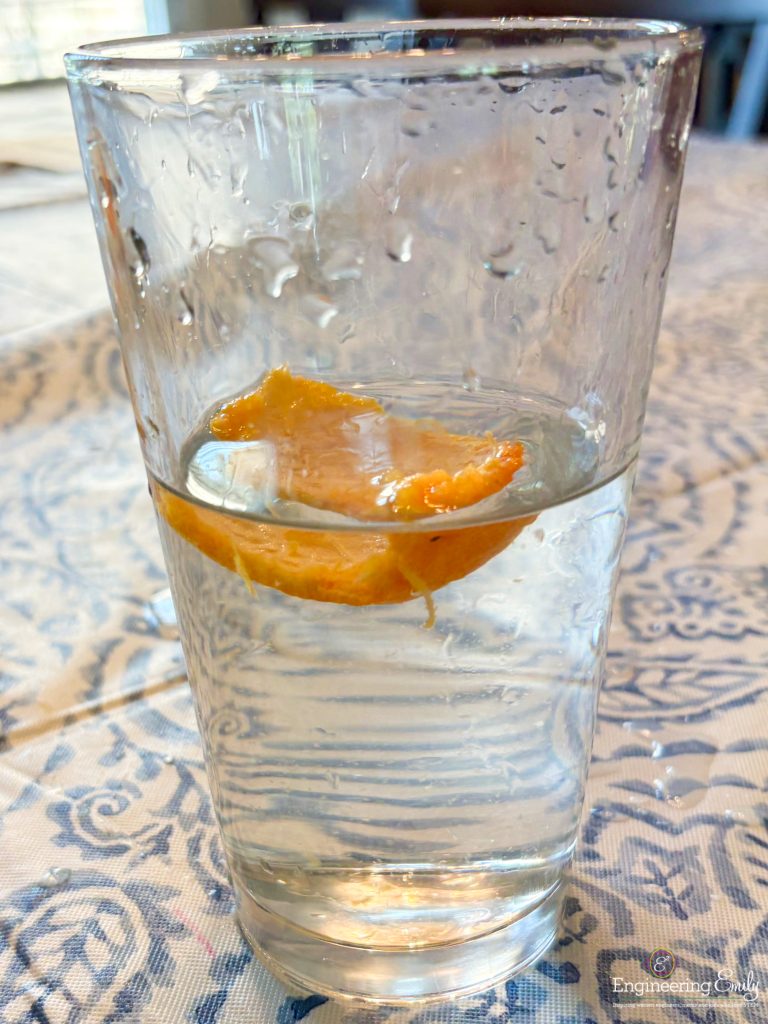
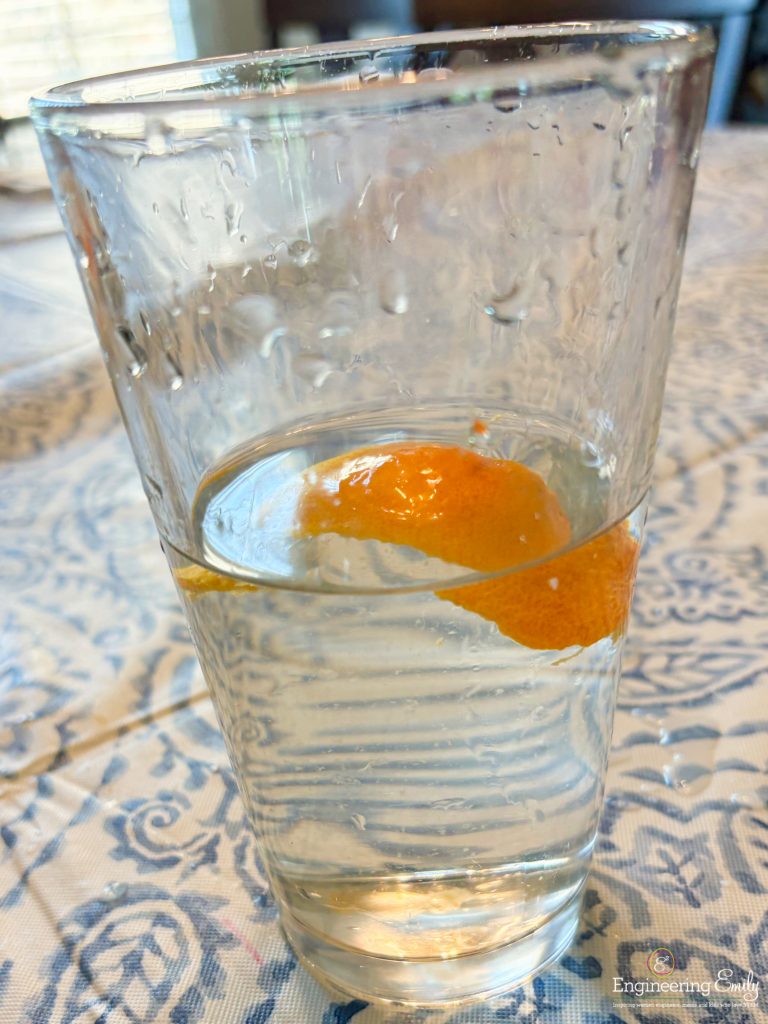
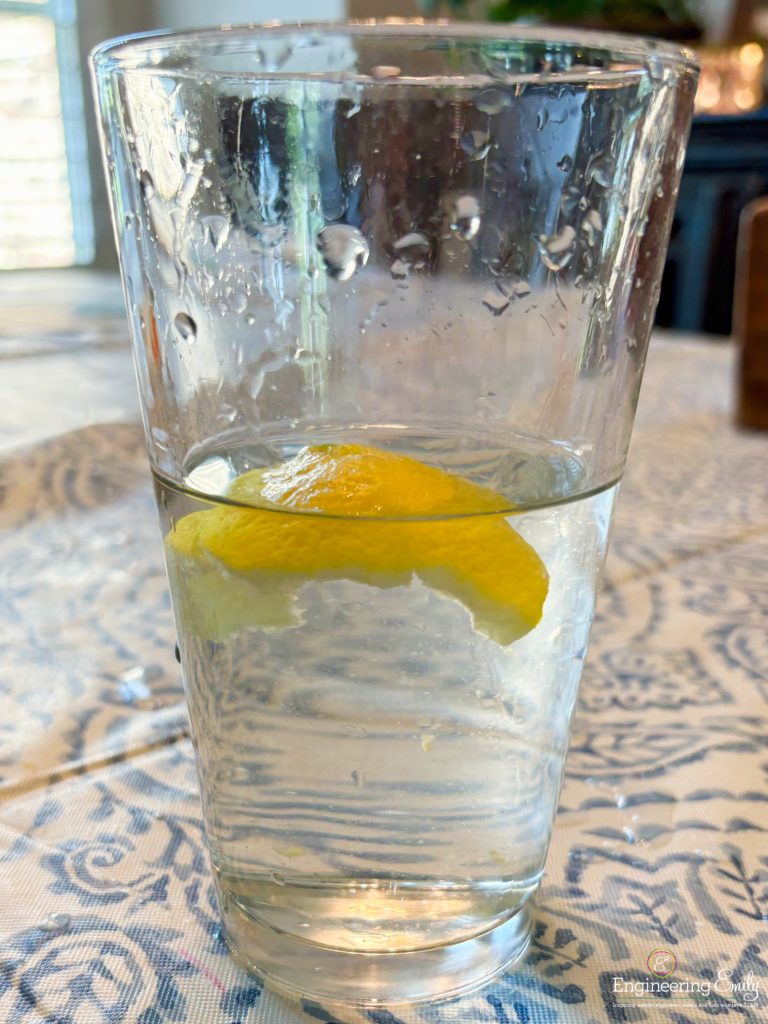
- Continue the activity by repeating with a different citrus fruit (such as lemon, lime, or grapefruit). Did you get the same result? {I originally didn’t peel off enough of the white rind on the lemon, see first picture below, and it floated, so I had to take time to scrape off the extra white rind to get it to sink. That’s why the mandarin works best for this – it’s much easier to peel.}
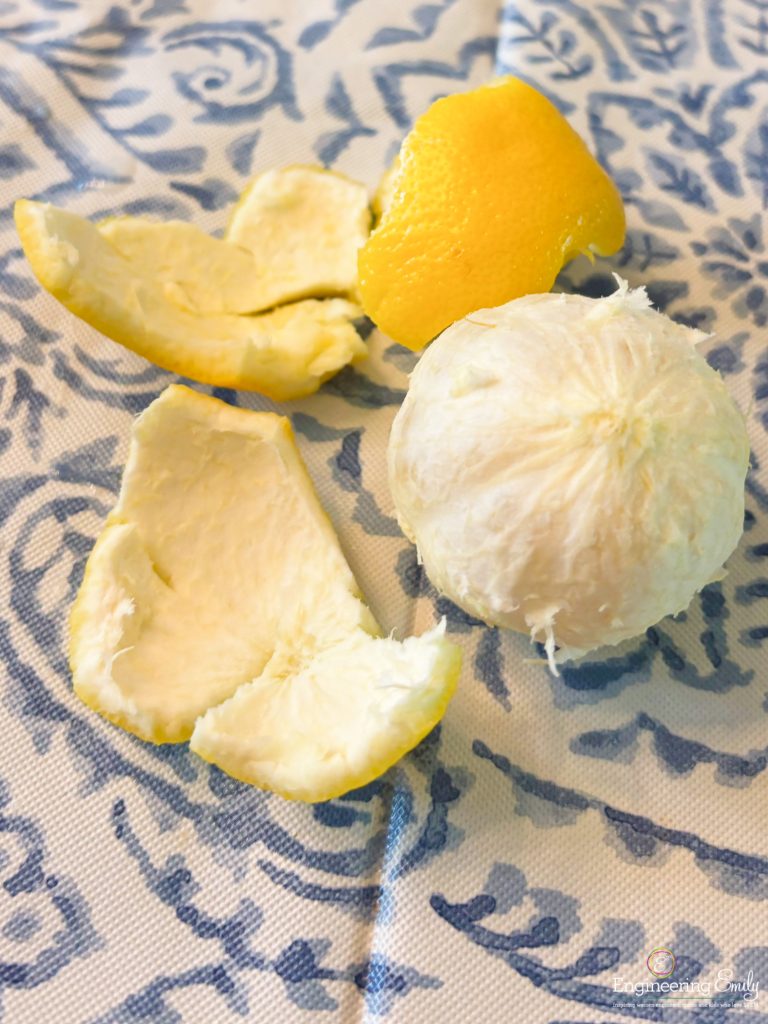
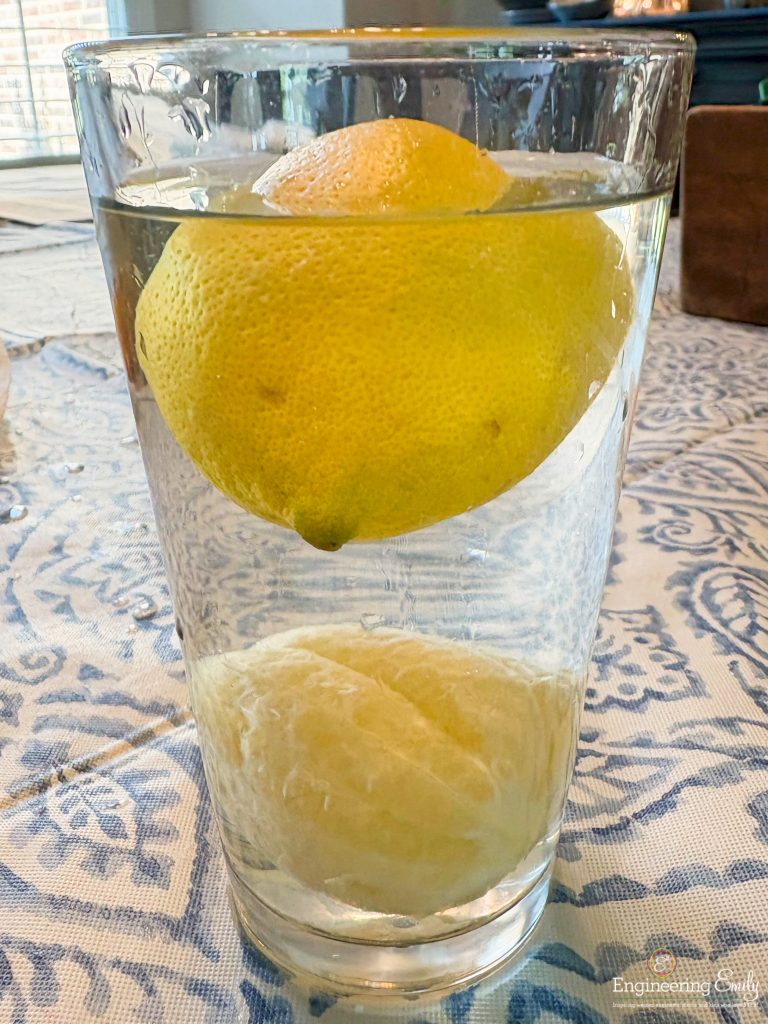
8. You may eat your peeled citrus fruit as a snack after the activity (with adult approval and supervision).
STEAM Concepts Learned:
Objects float due to buoyancy. Buoyancy is the upward force on an object from a fluid. It is determined by the density of the object being dropped into the fluid and the density of the fluid being displaced. Density is mass per unit volume. Since we’re using the same fluid (water) for both the peeled and unpeeled citrus fruit the difference lies in the peel.
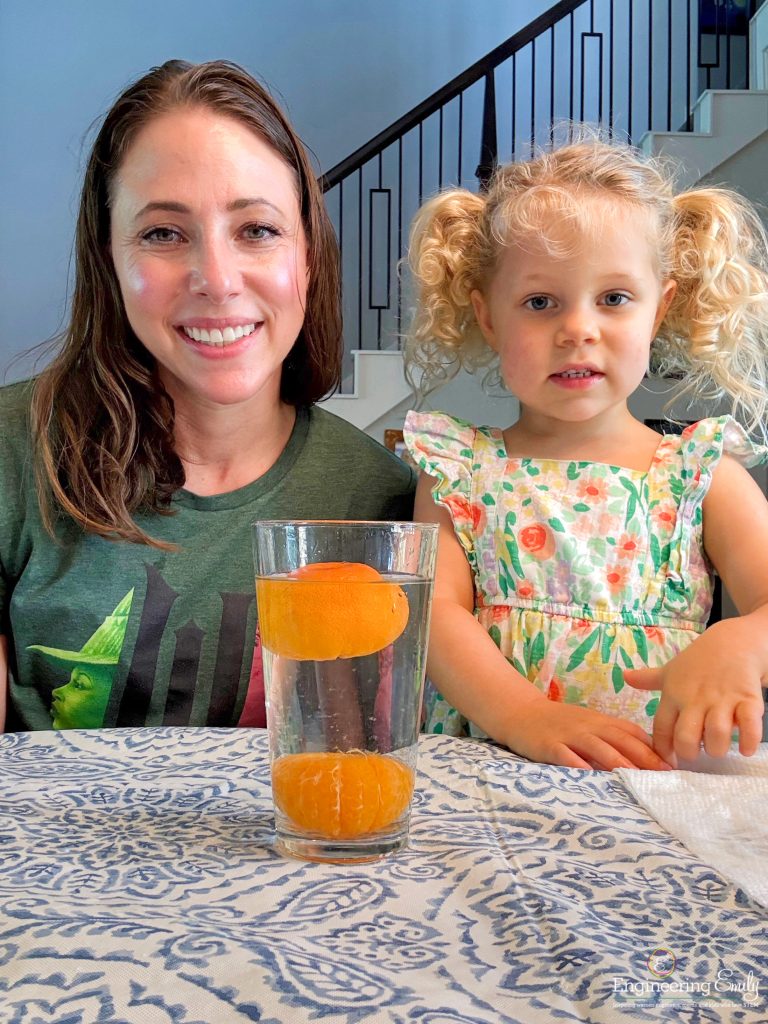
It is reasonable to guess the unpeeled citrus fruit would sink because it weighs more than the peeled citrus fruit (the peel has mass and when removed, the unpeeled citrus fruit has less mass). However we learned in this experiment that the opposite happened: the (heavier) unpeeled citrus fruit floated and the (lighter) peeled citrus fruit sank.
The citrus fruit peel is porous and contains many air pockets. These air pockets lower the density of the citrus fruit. The volume is increased with the peel on the citrus fruit causing it to displace more water compared to the peeled citrus fruit. The air pockets act like floaties for the citrus fruit and increase the buoyancy (think of how air bubbles rise in water).
This was a fun morning activity for me and my 3 year old. We were excited to see the difference the peel made in making the orange sink or float. The unpeeled citrus fruit is larger and feels heavier, so it was surprising to my daughter that the unpeeled citrus fruit floated while the smaller peeled citrus fruit sunk.
We hope you try this fun easy activity and let us know how it goes for you!