I’ve been trying to do a STEAM activity every week with my toddler on days she doesn’t have preschool. She has been loving it, and asks me constantly if we can do another science experiment! Instead of reinventing the wheel with her, I’ve gone back to the early days of the blog when my big kids were her age for inspiration.

This STEAM Activity was first featured on the blog as part of a two experiment post, 2 Ocean Themed STEM Experiments for Kids that was published 7 years ago. Since I did this activity with my older two children when they were toddlers, I knew my current toddler would enjoy it too. She loved this activity so much she has asked me if we could do it again every day since!
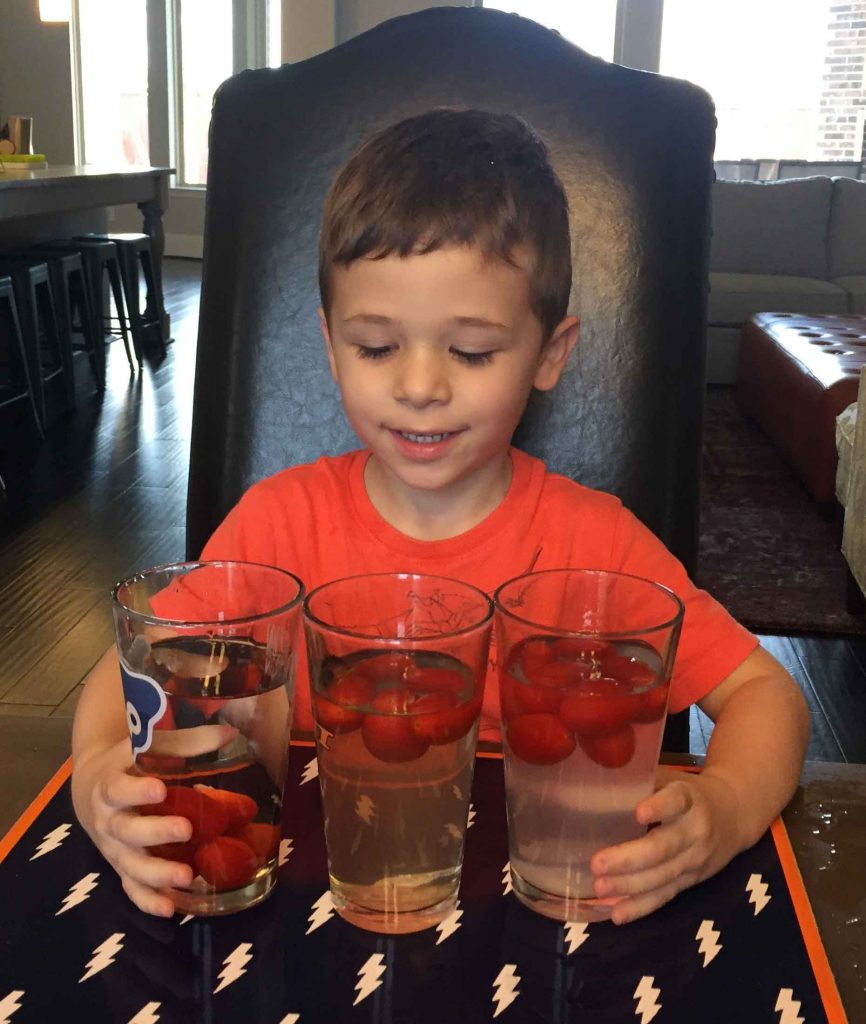
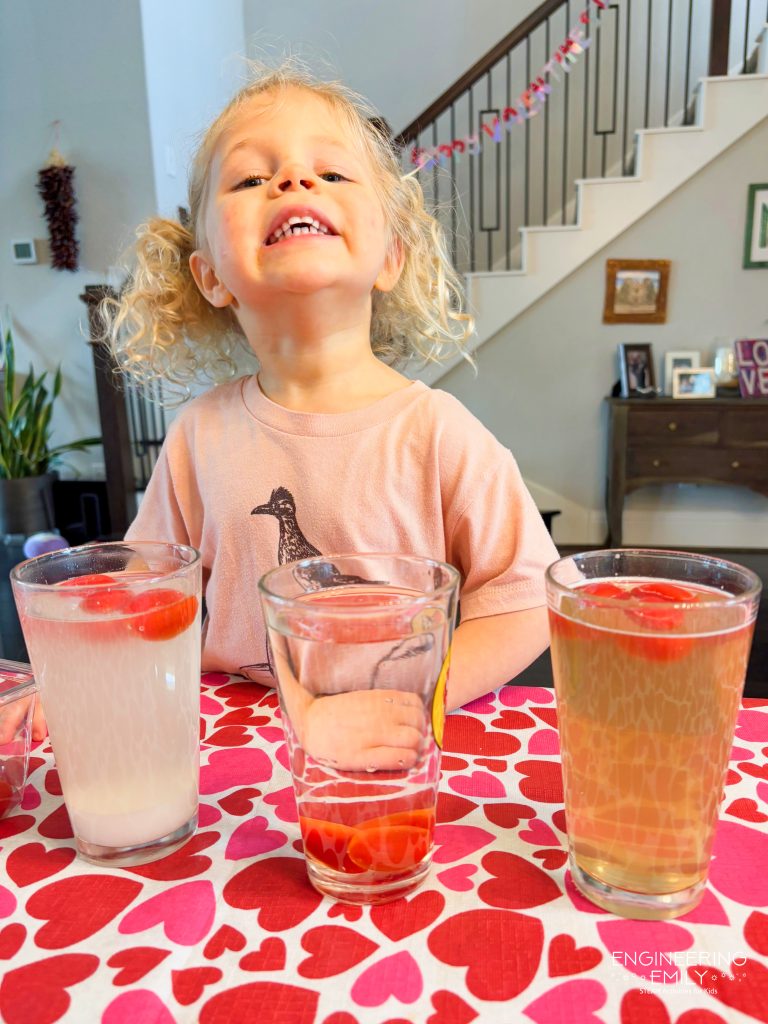
Above are pictures of my son at 3 seven years ago, and my youngest daughter at 3 years old today. You can tell by their smiles that they both had a blast with this activity! It’s such a great activity, I decided it needed to be featured in it’s own post. I will also be featuring the 2nd ocean themed STEM experiment from that post in its own blog post next week!
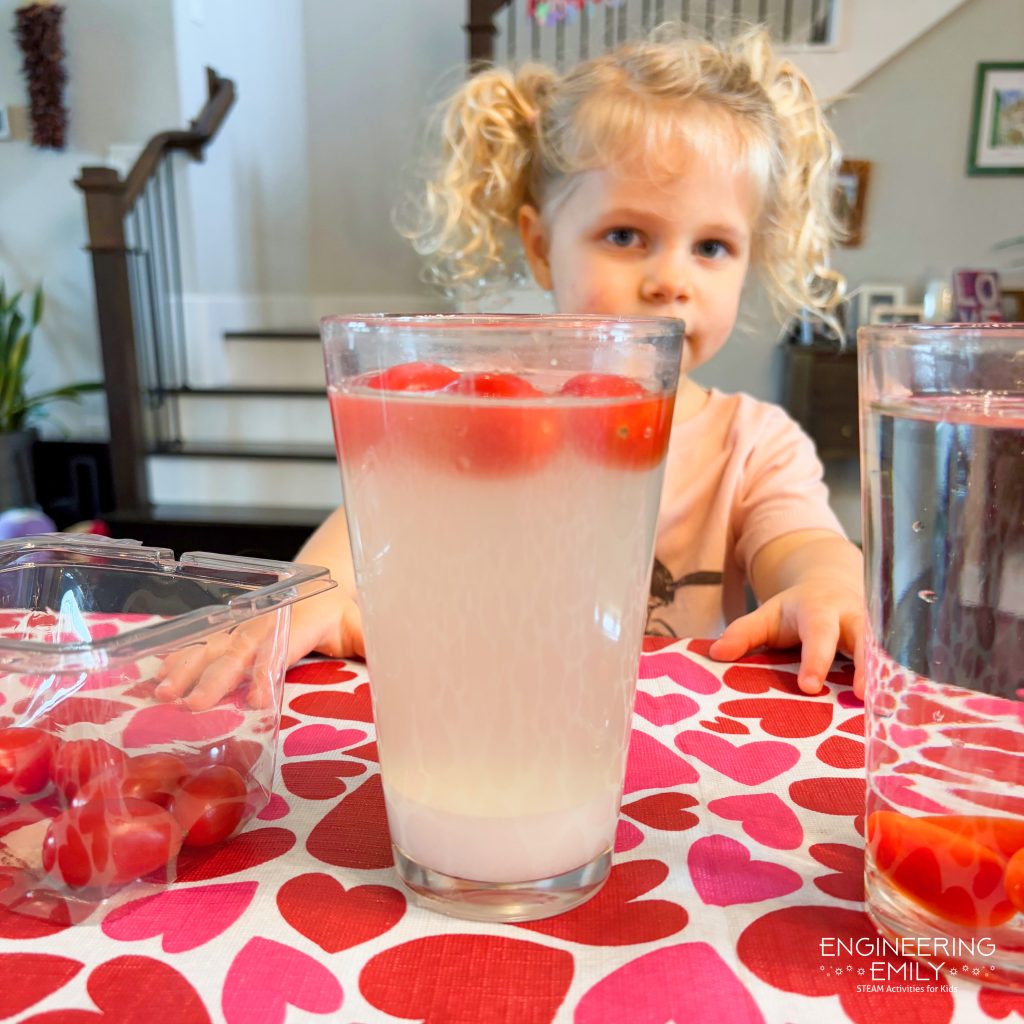
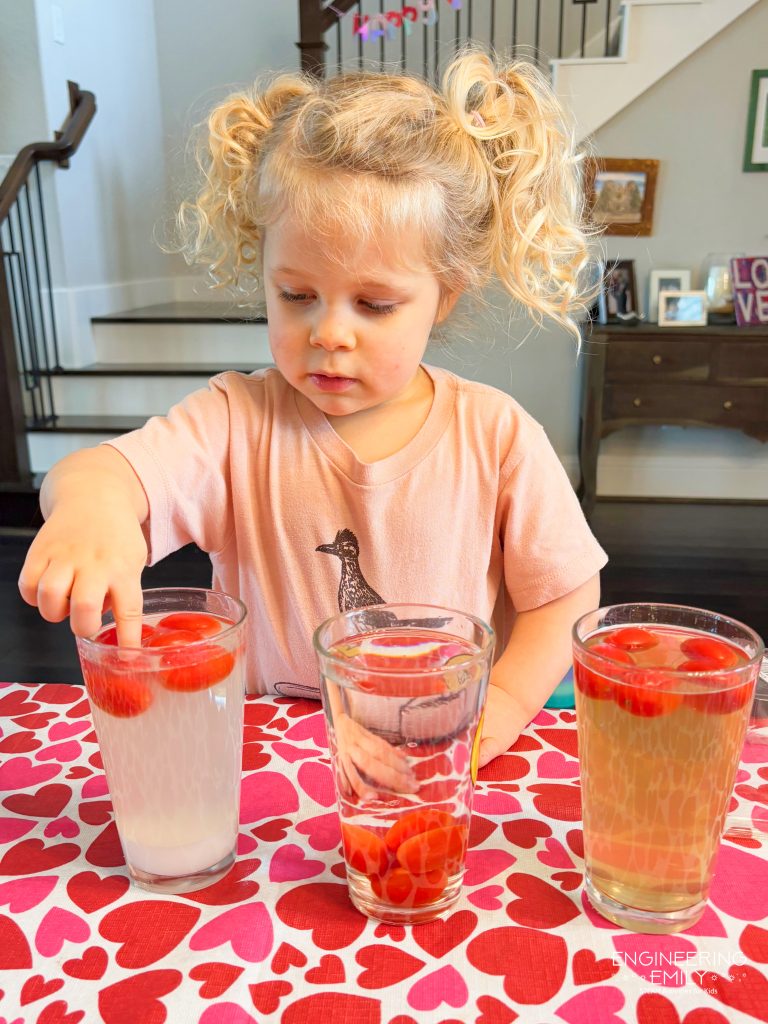
This activity is easy, fun and a great way to learn more about water density and why items sink or float. Kids will make guesses on if they think the cherry tomato will sink or float in each liquid, and then observe if their guesses are correct. They will be amazed to see that the same cherry tomatoes will sink in tap water, but will float in salt and sugar water.
And there are lots of ways to expand the learning beyond density. You can help your child learn math with counting the tomatoes, learn arts by asking about the color of the liquids and tomatoes, learn about volume by noticing how the volume of liquid in the cups increase by adding salt and sugar. My kids did this activity at age 3, and while this is the youngest age I recommend for this activity, it will also be fun for older kids and you can easily adjust it to their age and knowledge.
I shared this activity in video format on my Instagram account! If you’re not already following me, go check it out. Here is a link to the video:
Will tomatoes Sink or Float?
In this activity the child will learn about how salt and sugar affect water density. They will guess then test if objects will sink or float. This activity is recommended for children age 3+.
Materials:
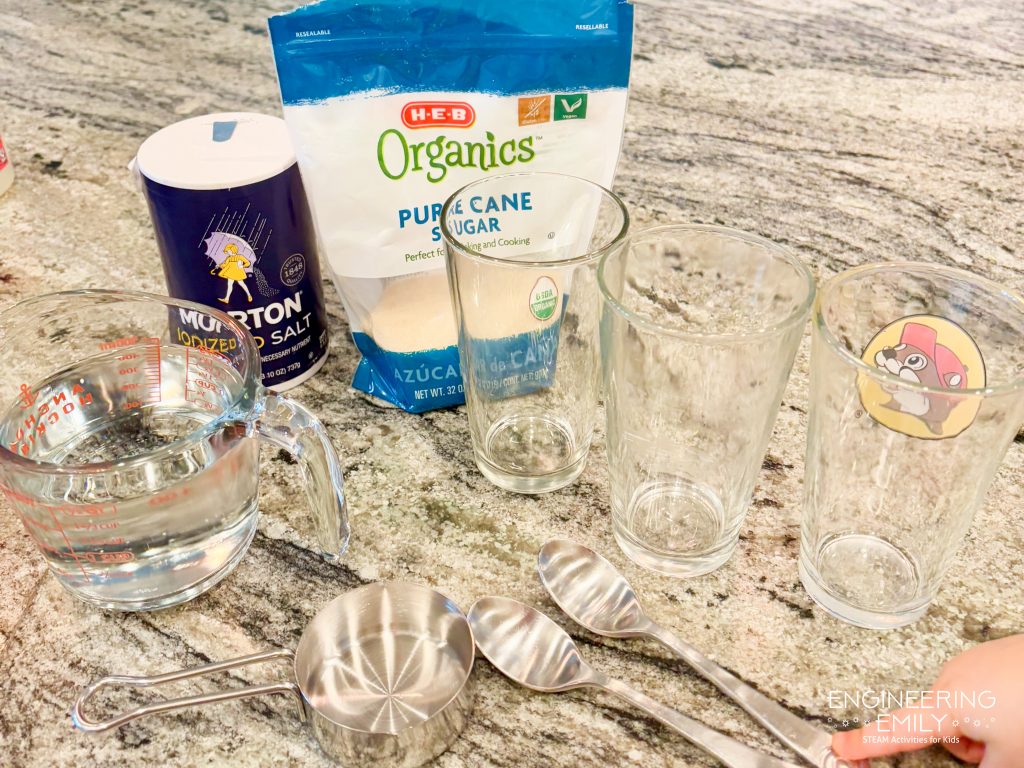
- 3 clear cups or bowls
- Tap water
- 1/2 cup salt
- 1/2 cup sugar
- Cherry tomatoes or grape tomatoes (we used grape tomatoes)
Safety:
Although the materials used in this activity are edible, ask the child not to eat or drink them after they have been used in the activity. Cherry tomatoes can be a choking hazard for young children. Keep an eye on young children while using cherry tomatoes to make sure they don’t attempt to eat them. Have towels on hand to clean up any spills to prevent slips and falls.
Procedure:
- Fill each of the three cups with ~2 cups of tap water.

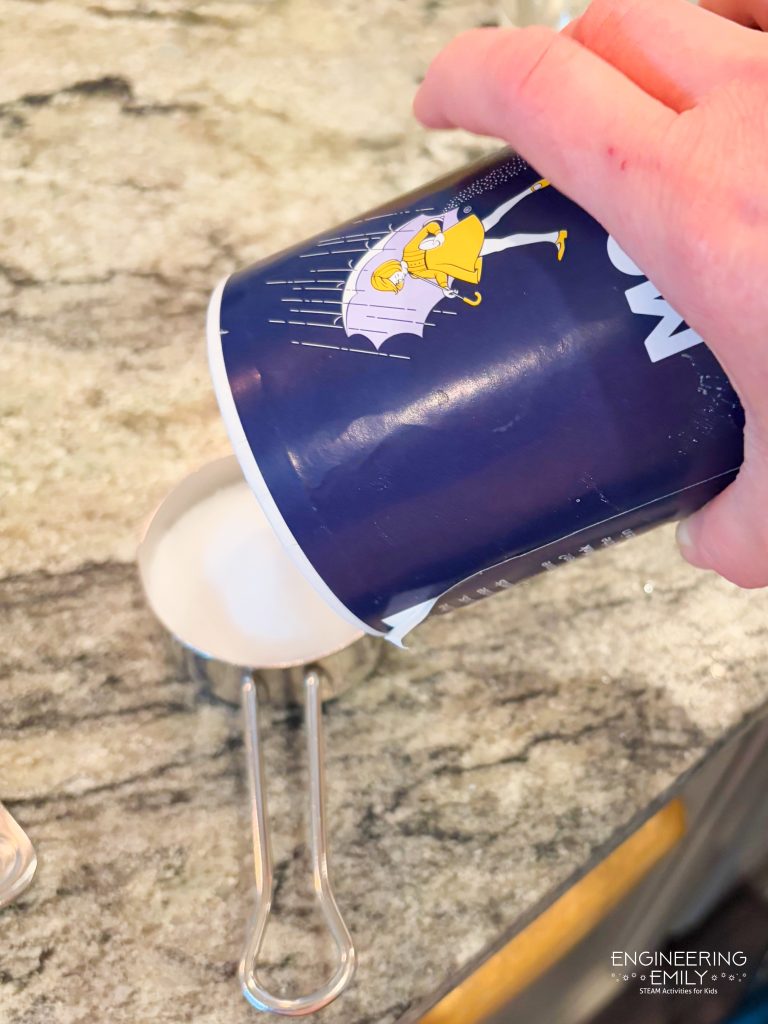
- Add 1/4 to 1/2 cup salt into one cup and stir until it completely dissolves (only add as much as will dissolve, so start with 1/4 cup and add more until it won’t dissolve).
- Add 1/4 to 1/2 cup sugar into a second cup and stir until it completely dissolves (only add as much as will dissolve, so start with 1/4 cup and add more until it won’t dissolve).
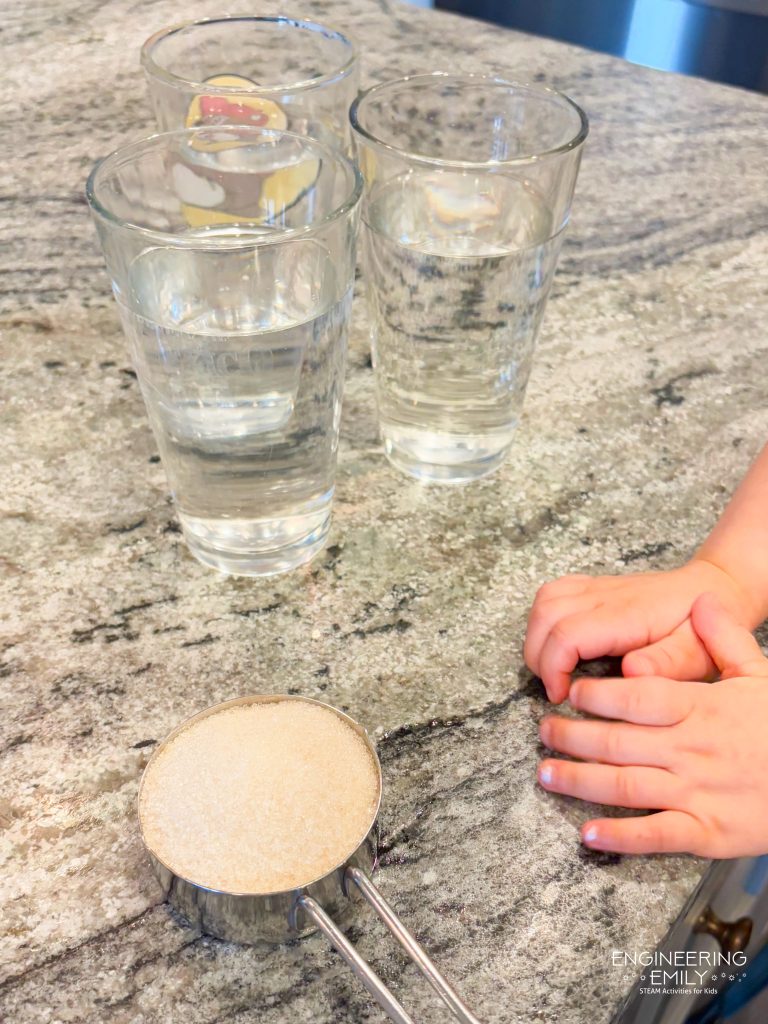
- Line up the 3 cups (one tap water, one salt-saturated water, one sugar-saturated water) in front of the child.
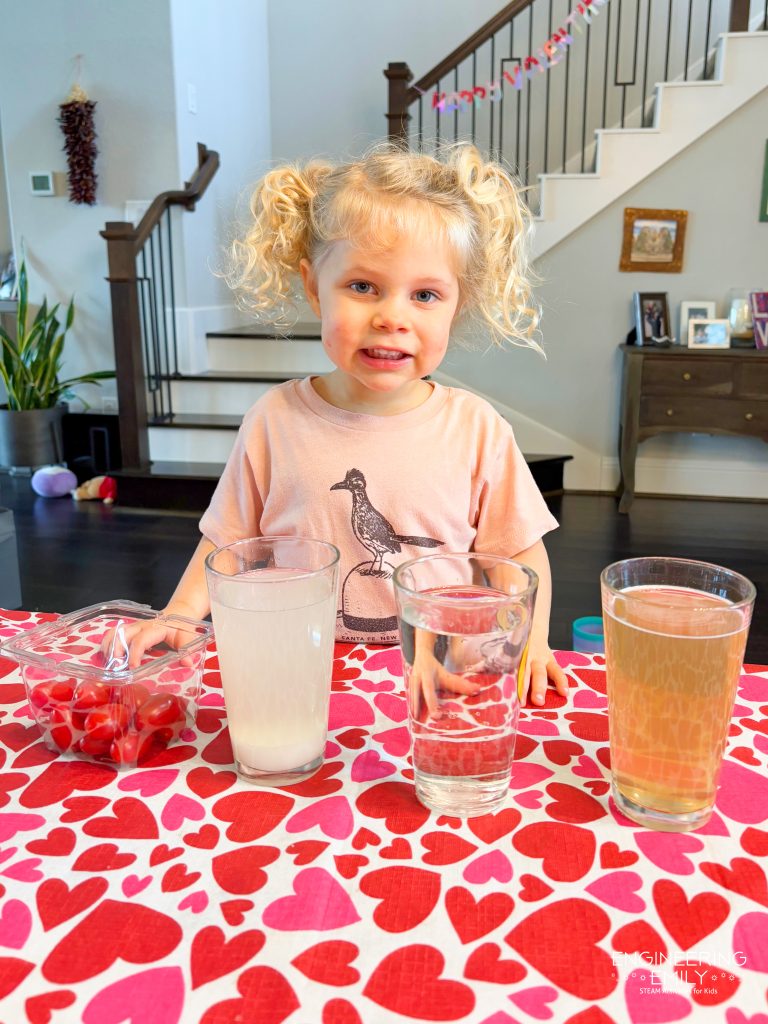
- Ask the child to guess if the tomato will sink or float before dropping it into each cup.
- Drop a tomato into each cup and watch what happens.
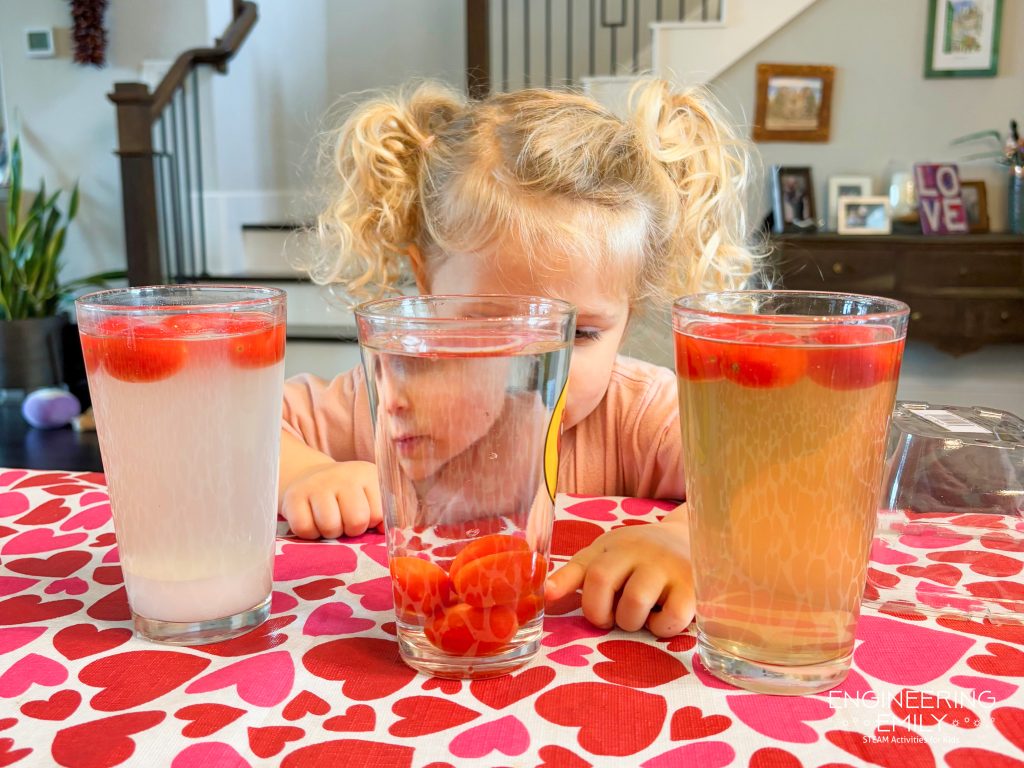
- The tomato will float in both the salt and sugar water and sink in tap water.
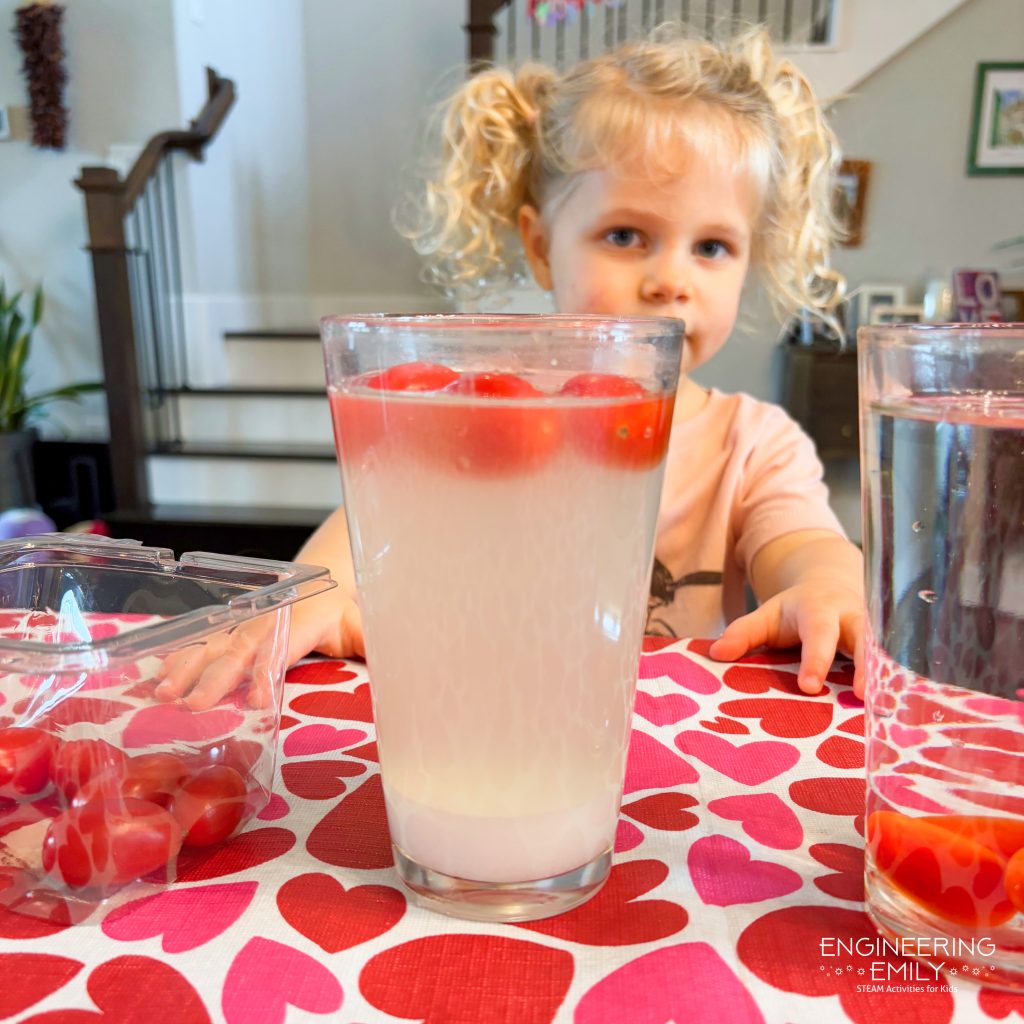
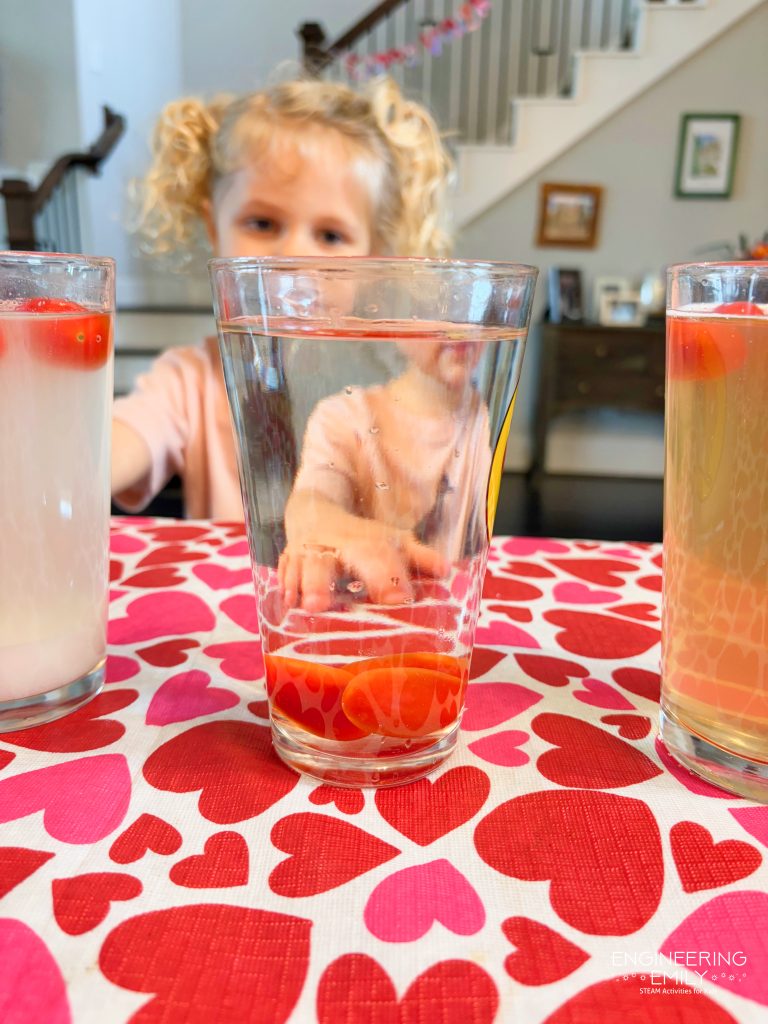
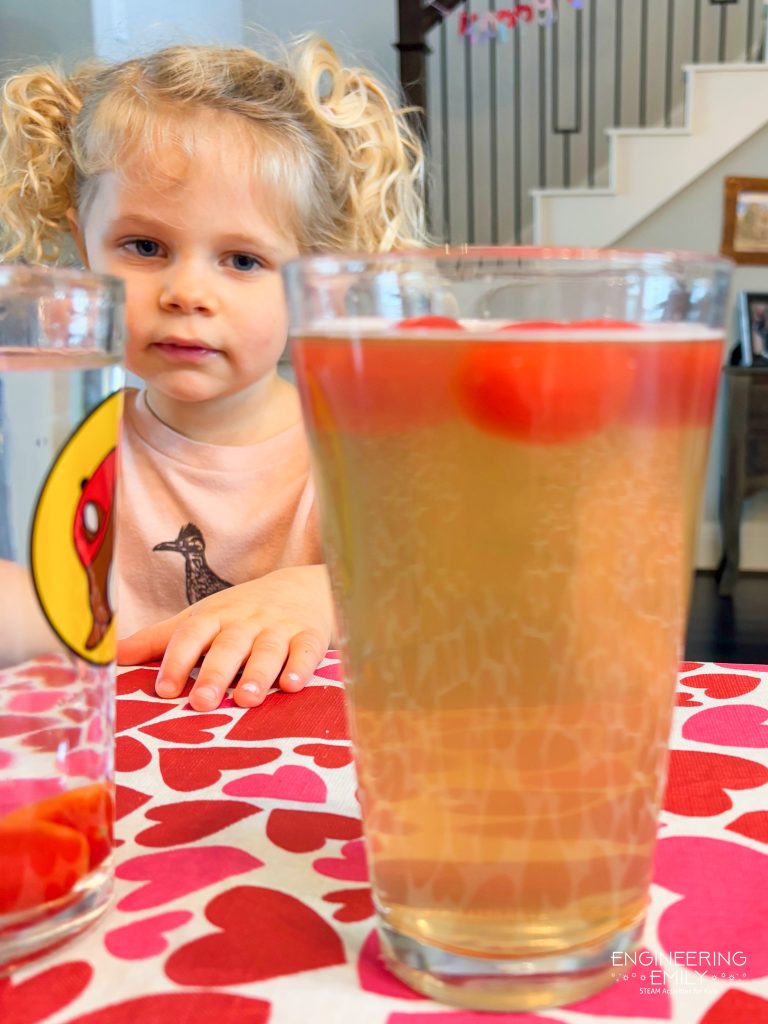
- Ask the child to count the tomatoes in each cup. Toddlers can press the tomatoes down into the salt and sugar water as they count them. It is great math counting practice, fine motor skill practice, and a depth perception challenge to count the tomatoes in the bottom of the tap water cup from the outside of the cup.
STEAM Concepts Learned:
The density of an object is mass times volume. Adding salt or sugar to water increases the water’s mass without adding much volume, so this increases the water’s density.
Objects float due to buoyancy. Buoyancy is the upward force on an object from a fluid. It is determined by the density of the object being dropped into the fluid and the density of the fluid being displaced. If you’re dropping the same object into salt and fresh water, it will have greater buoyancy (float better) in the salt water because the salt water has greater density.
The cherry tomatoes floated in salt and sugar water because it is more dense than the tomatoes. Tap water has less density than the tomatoes, so they sank.
You may notice the tomatoes float a little better in salt than sugar water. Although 1/2 cup sugar actually weighs more than 1/2 cup salt, sugar is not as soluble in water as salt. Thus, not as much sugar will dissolve into the water. Sugar water will be less dense than salt water (more salt dissolved into the water increasing the mass of the water). This means sugar water will have less buoyancy than the salt water.
My big kids loved this experiment when we did it 7 years ago, and my toddler loved it when we did it now. It’s a great, timeless activity for toddlers (and I think older children would enjoy it as well). It doesn’t take a lot of time or materials, so it’s easy to try it on a cold or rainy day at home.
If you liked this experiment and want to have this activity and more Water Themed STEAM Activities for Kids in your hand anytime, anywhere I encourage you to check out my Printable in the Shop. It gets right to the point – no ads, no background stories, no pictures, just the activity and explanation in a brief, easy to read format.

Water STEAM Activities for Kids
Water is essential to human life and it is a great way demonstrate many STEAM concepts. This is a collection of 34 water themed STEAM experiments and activities from the Engineering Emily blog. This printable pack also includes a Table of Contents, an Introduction with information about Engineering Emily, an explanation of the meaning of STEAM, What to Expect in each activity printable, Tips for Success, and an Overview of the water activities, followed by 34 two-page easy and fun water themed activities for kids.