Note: This post contains affiliate links. You may read my disclosure here.
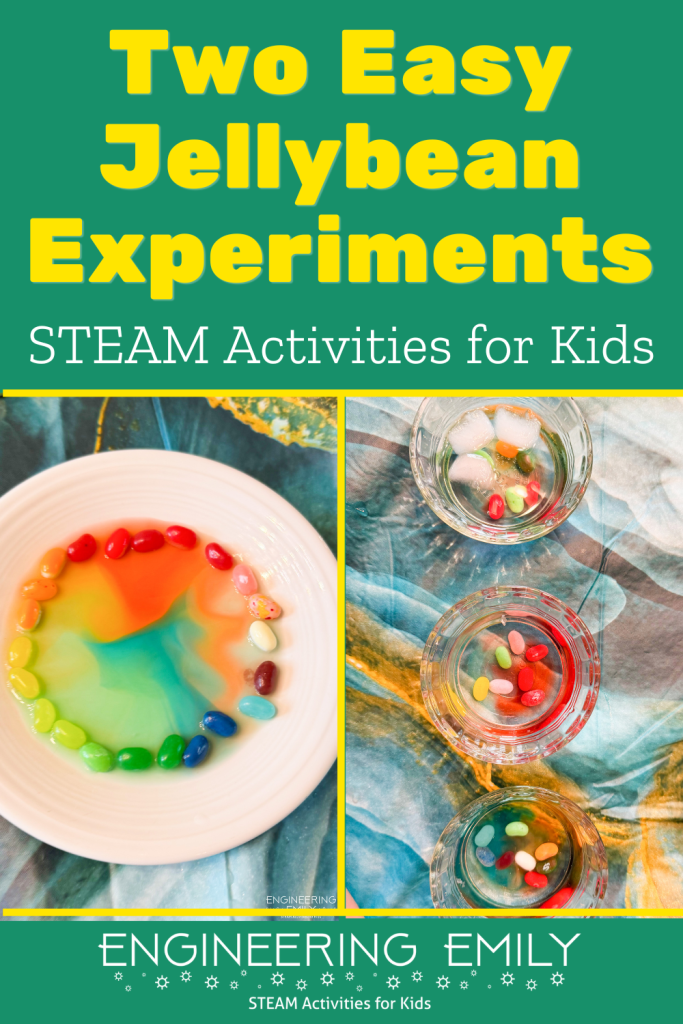
I know Easter was over a month ago, but the end of the school year has me behind on everything, including disposing of uneaten candy and sharing this post. If you haven’t gotten rid of or eaten all your Easter candy yet either, then this post is for you! If not, save it for next Easter or go buy some more jellybeans to try it now! 🙂
Every year my kids get jellybeans in their Easter baskets. This year none of my three kids ate any jellybeans. We were overrun with jellybeans, so instead of throwing them away, I decided we could do some STEAM experiments with them instead!
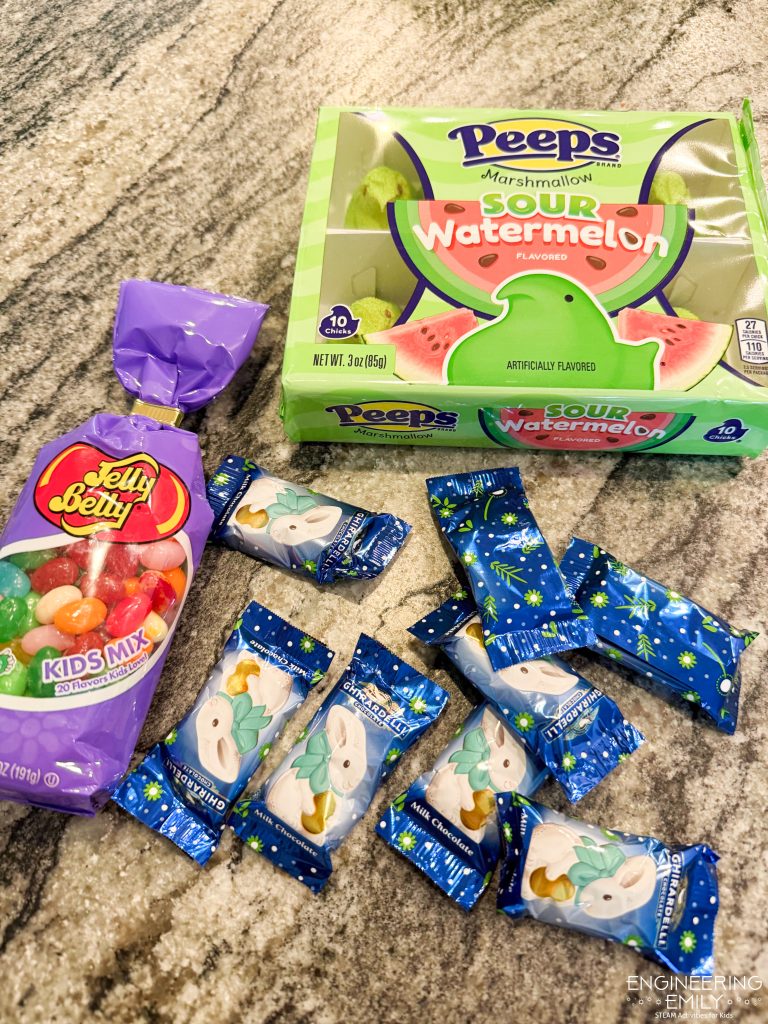
For these experiments, I reimagined two experiments we have done in the past with Halloween candy!
The first experiment is Jellybean Diffusion (inspired by my Halloween Candy Color Diffusion experiment). I didn’t know if it would work with jellybeans before I started, but that is what experimentation is for! And that is exactly what the STEAM Activity Journal is for: designing, testing, and analyzing new experiments!
The second experiment is Observe Jellybean in Water Experiment (inspired by my Candy Corn Experiment). This experiment works with most holiday candies: we have also tried it with candy corn, conversation hearts, and Peeps – I’m thinking we need to do a Christmas version with candy canes next!
Jellybean Diffusion
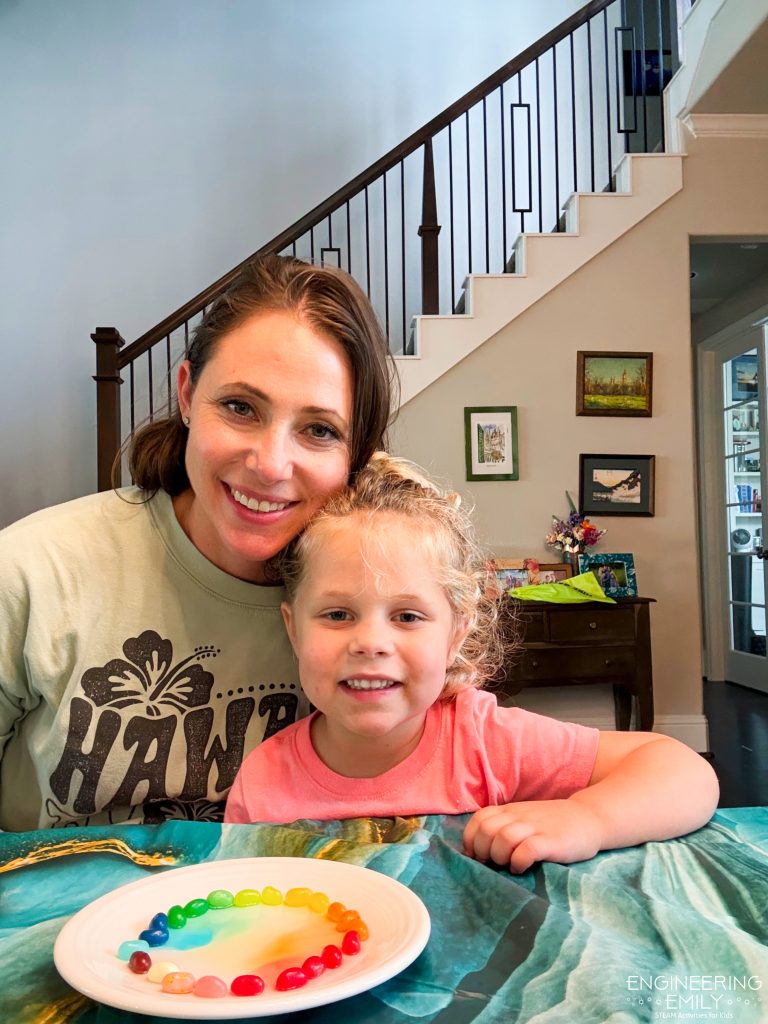
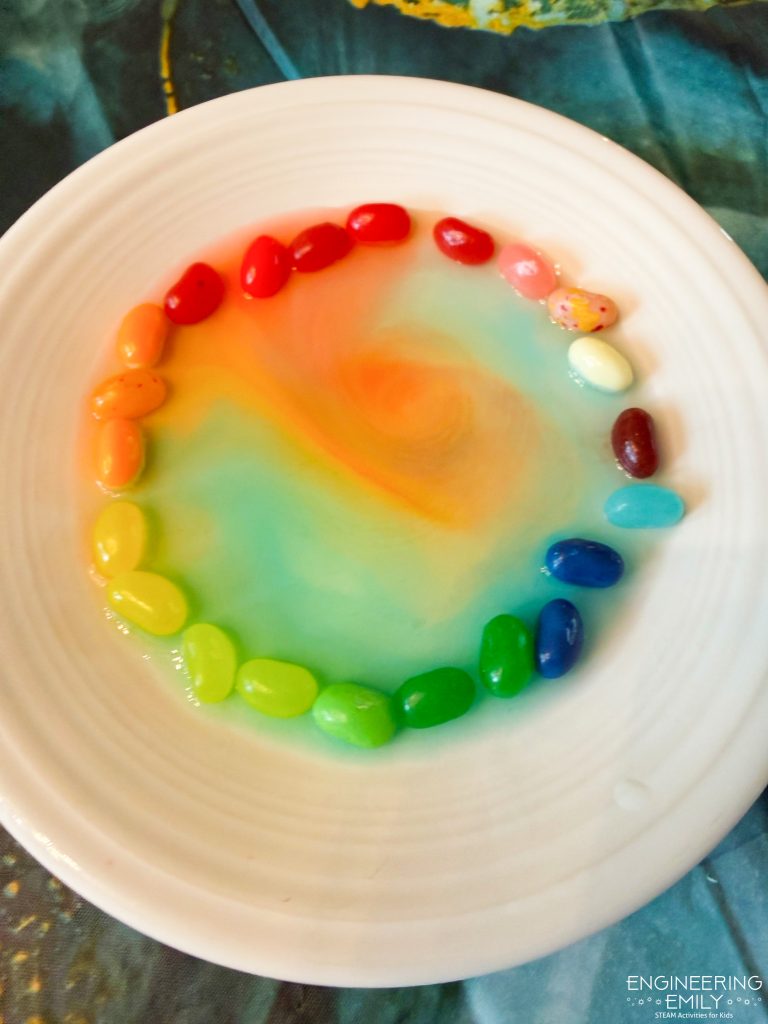
This is experiment is for kids who love color. They can arrange the jellybeans in a pattern then watch the colors diffuse from the jellybeans into the center of the plate. It’s an colorful STEAM Activity for kids ages 3+, who can safely eat jellybeans without choking (just in case they sneak one in their mouth during the experiment).
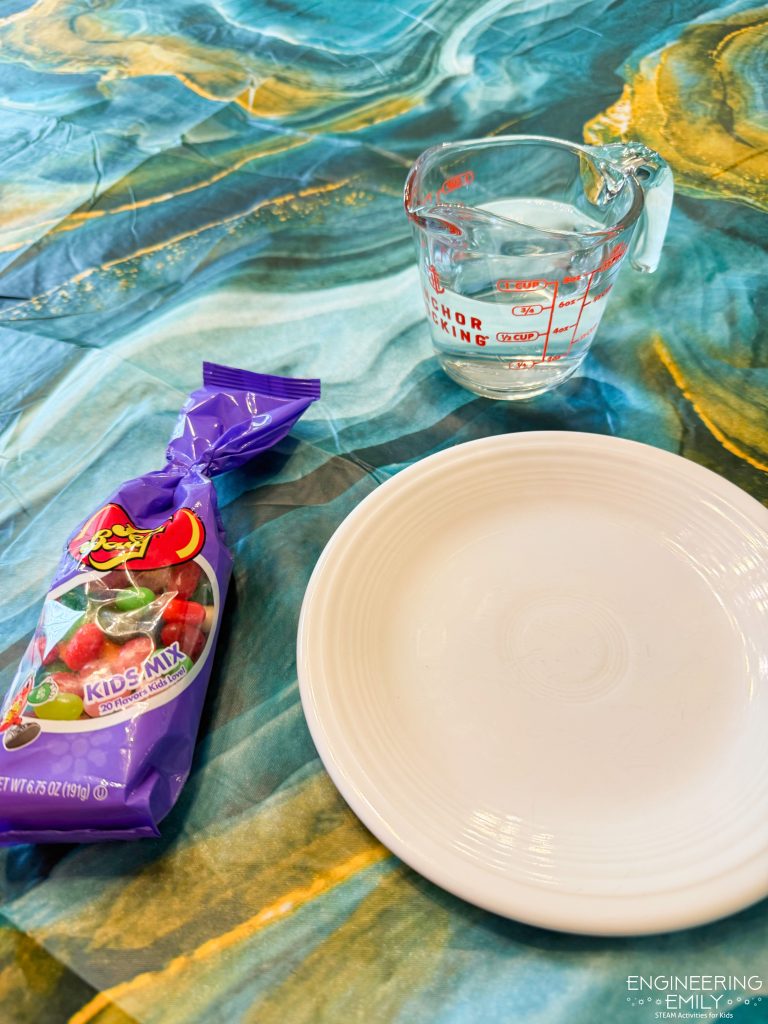
Materials:
- Flat plate
- Jellybeans
- Warm water
Safety:
Jellybeans can be a choking hazard to young kids. Keep away from children 3+, and advise kids to thoroughly chew the jellybean before swallowing if they do eat one. I do not recommend eating the jellybeans after they have been used for this experiment.
Procedure:
- Arrange the jellybeans around the perimeter of the plate. You many arrange them in a color pattern (red, blue, green, repeat), or in rainbow order around the plate. There are no rules to this step, do what makes you happy!
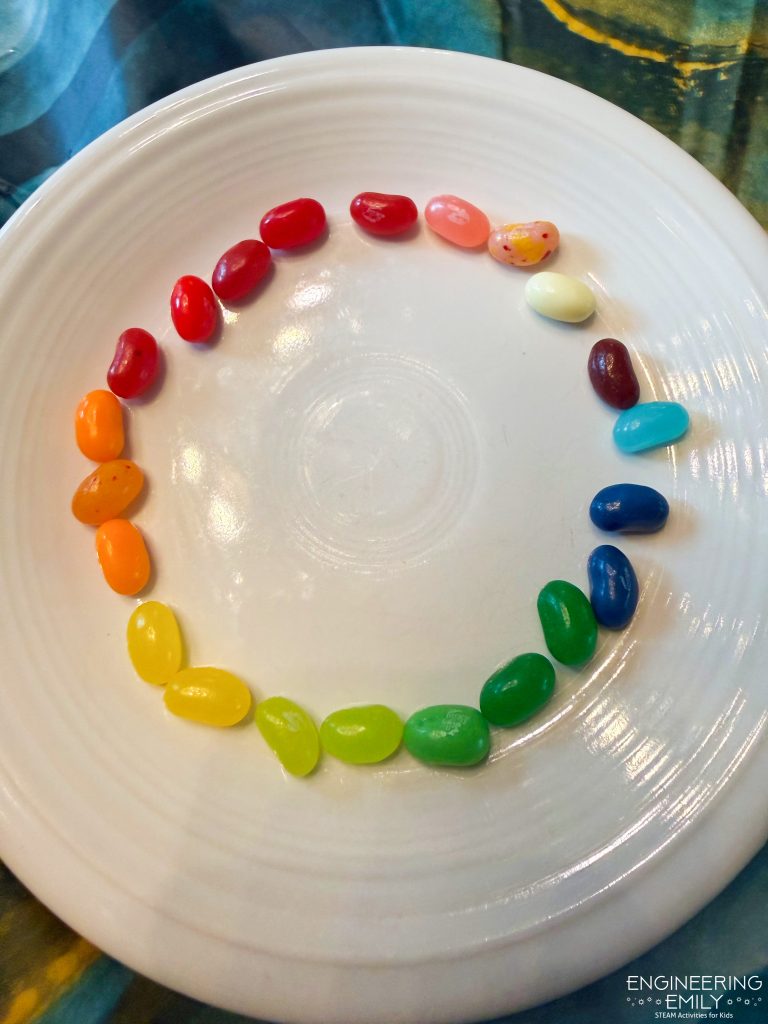
- Slowly pour warm water into the center of the plate until it touches the jellybeans.
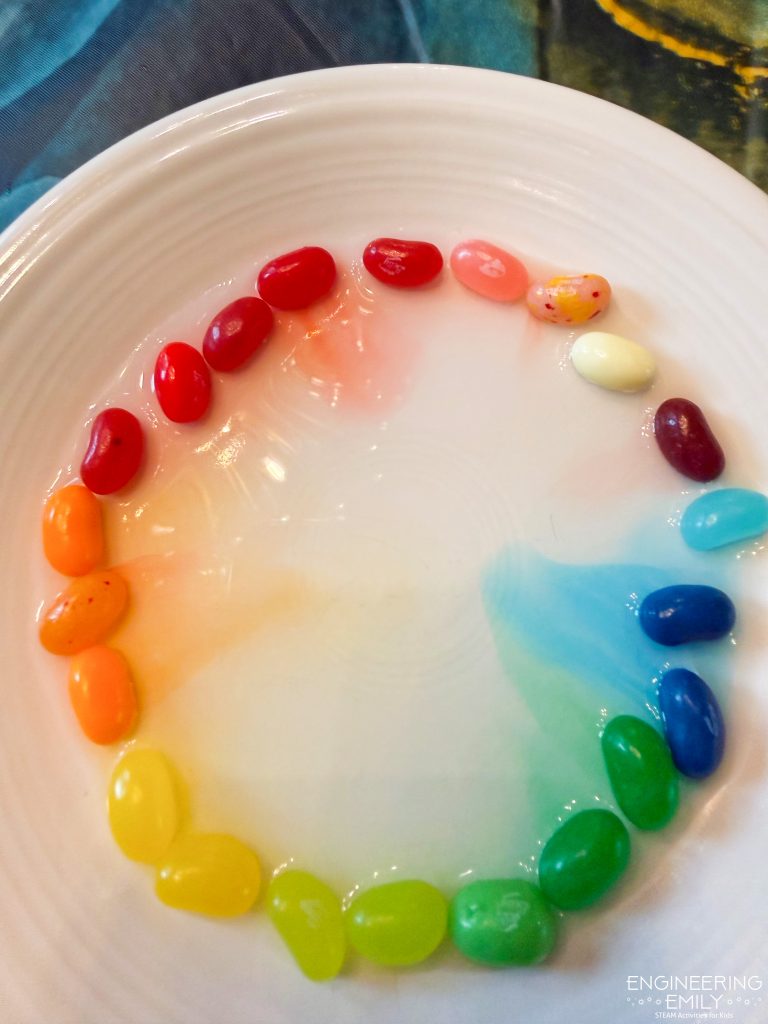
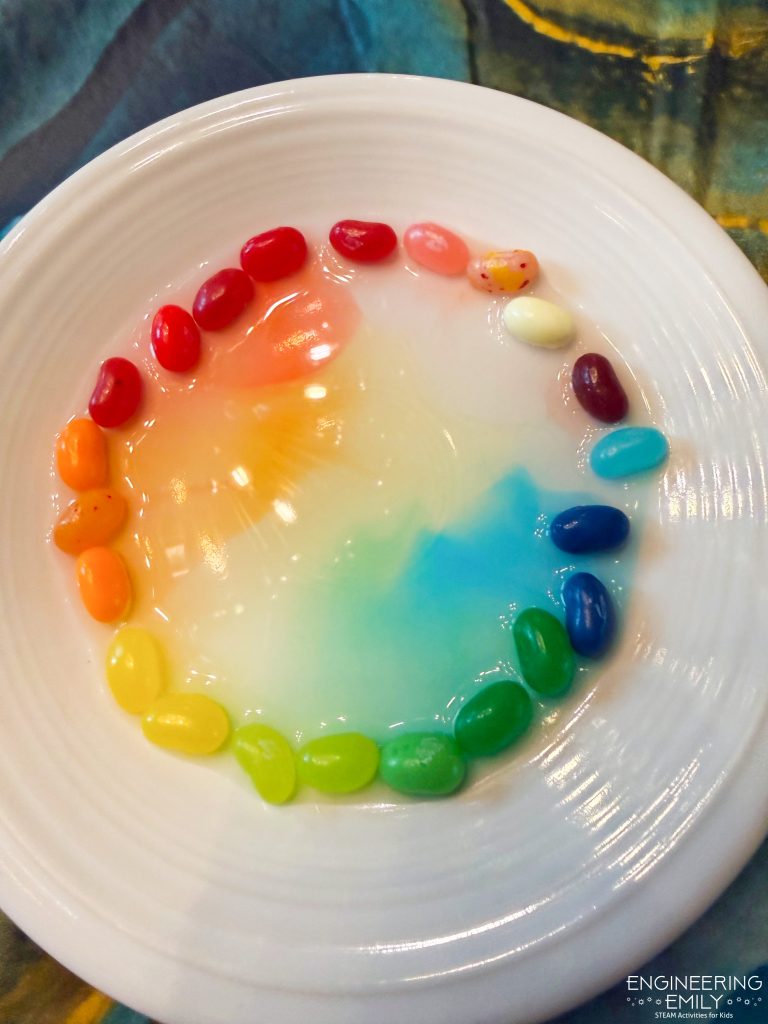
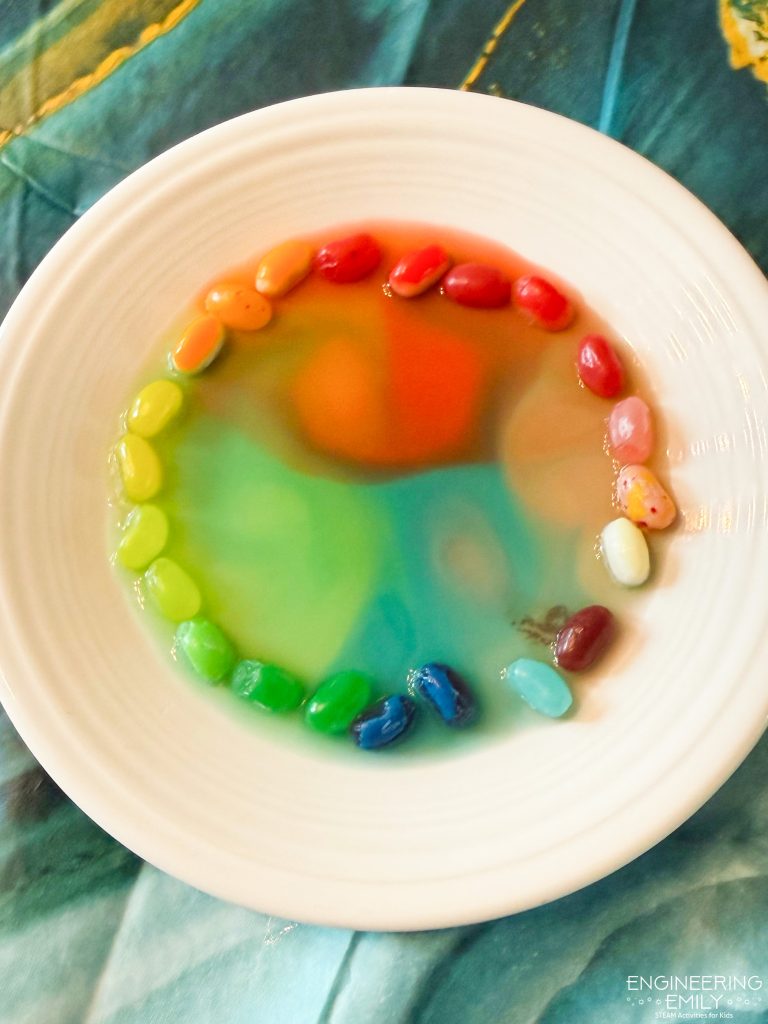
- Sit back and watch the colors diffuse from the jellybeans into the center of the plate. It makes a colorful design!
STEAM Concepts Learned:
In this experiment, the colors spread by diffusion. The artificial dyes used in the jellybeans are water soluble. In the water they begin to diffuse (spread from area of highest concentration to the area of the lowest concentration). For further experimenting, you can test if water temperature (cold vs. hot) affects how quickly the colors diffuse.
Encourage young kids to practice simple math patterns (AB, AABB, etc.), and counting while arranging the candies. You can also practice the color wheel by asking them to arrange the candies in color wheel/rainbow order (red, orange, yellow, green, blue, purple). You can take the time to discuss primary and secondary colors with them for extra learning opportunities.
Watch it on YouTube:
You can see my full YouTube video of the experiment below:
observe Jellybeans in Water Experiment
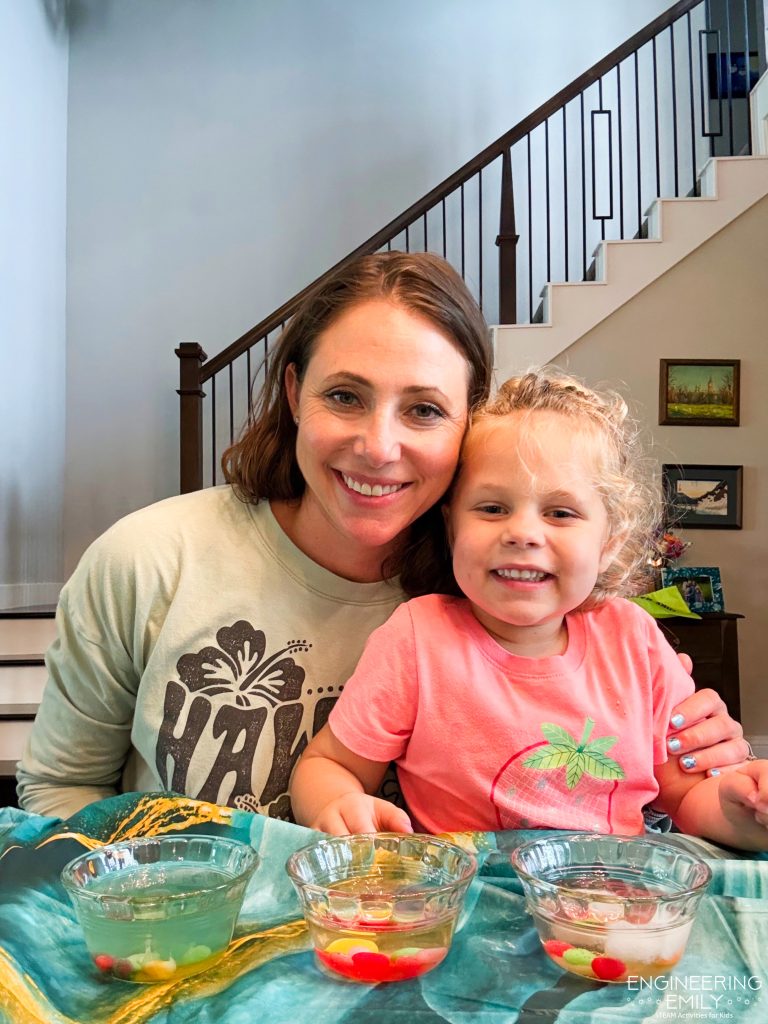
This is a classic experiment that we have done with three different candies for three different holidays in the past, and we’re doing it again for a fourth time with jellybeans because it’s that good! You will love this super easy, but super entertaining and educational experiment. You’ll be surprised by all the learning opportunities in this simple experiment. This experiment is recommended for kids ages 3+ due to the choking hazard of jellybeans.
Materials:
- 3 small bowls
- Hot water
- Room temperature water
- Ice water
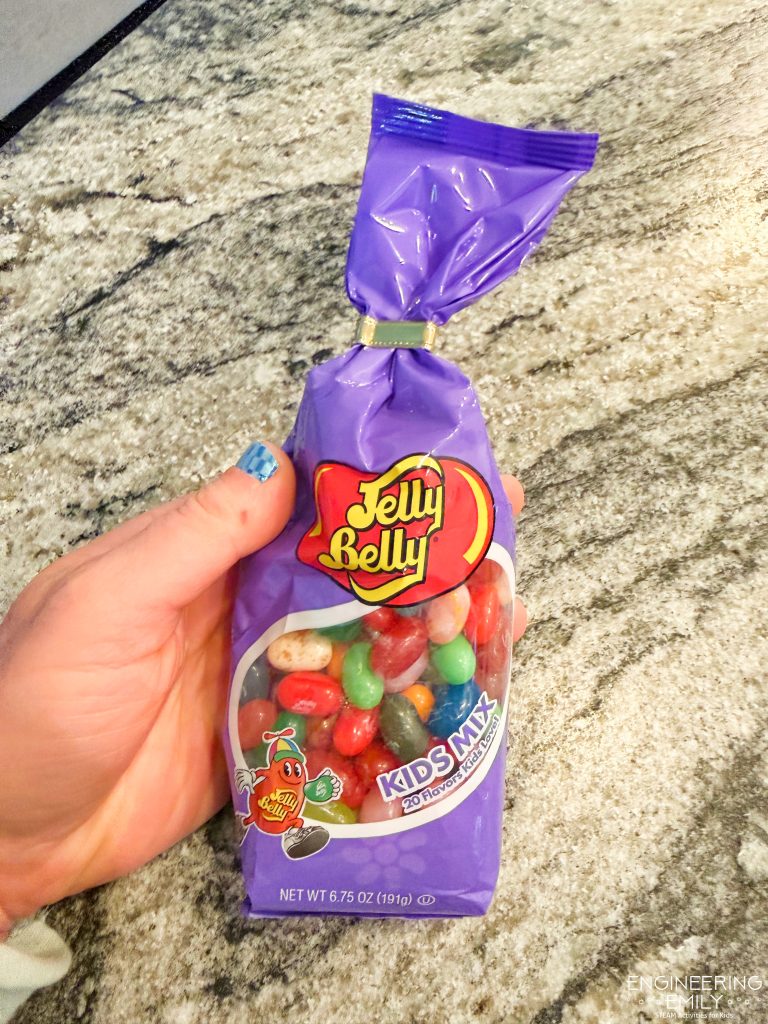
- Jellybeans
Safety:
Jellybeans can be a choking hazard to young kids. Keep away from children 3+, and advise kids to thoroughly chew the jellybean before swallowing if they do eat one. I do not recommend eating the jellybeans after they have been used for this experiment.
Procedure:
- Set out the three bowls on a table.
- Fill the first bowl with hot water.
- Fill the second bowl with room temperature water.
- Fill the third bowl with ice water.
- Optional: hold a handful of jellybeans and guess if they will sink or float in each bowl.
- Drop a handful or jellybeans into each bowl. [they will all sink]
- Count how many jellybeans you dropped into each bowl.
- Watch what happens to the jellybeans in each bowl.
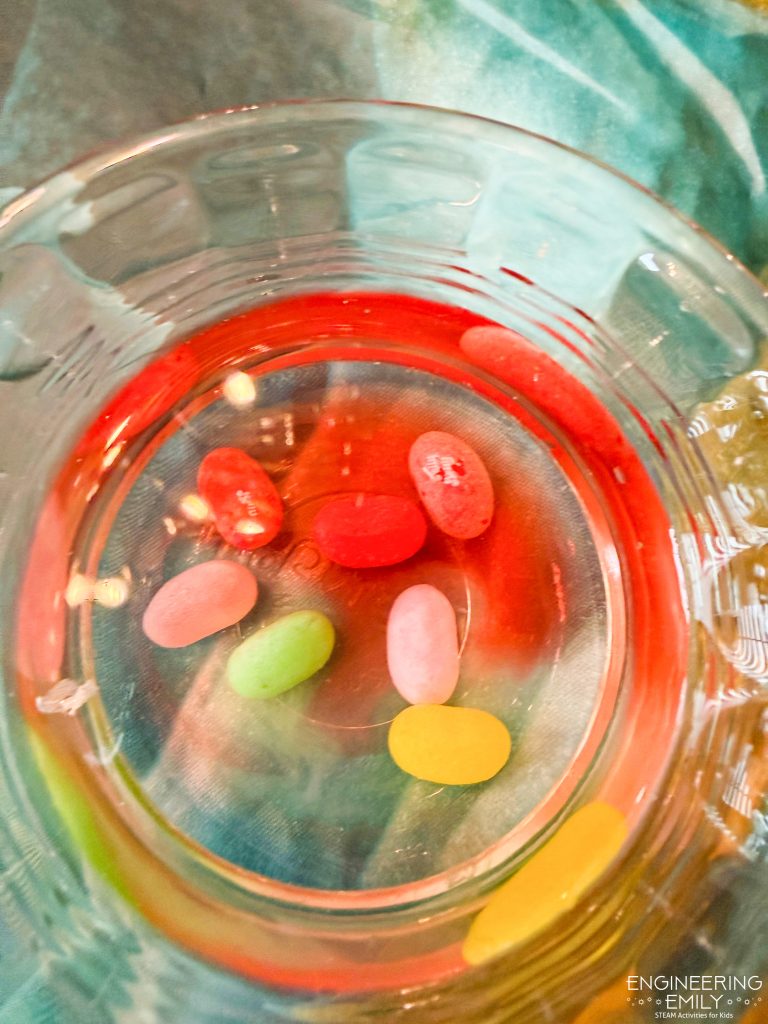
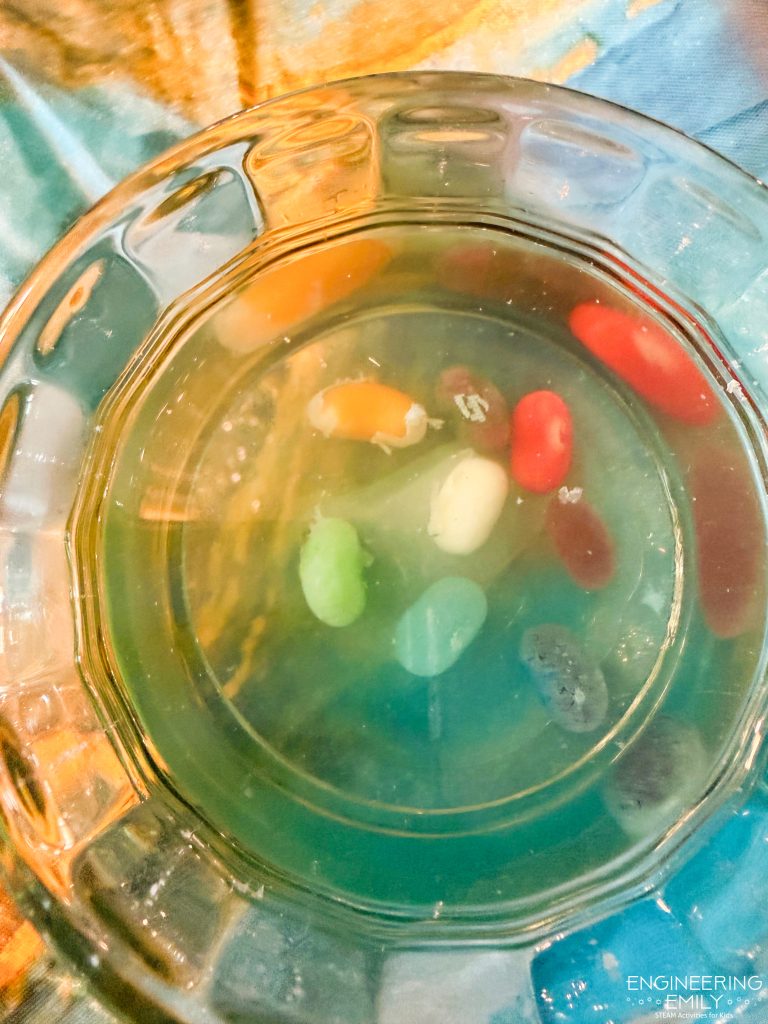
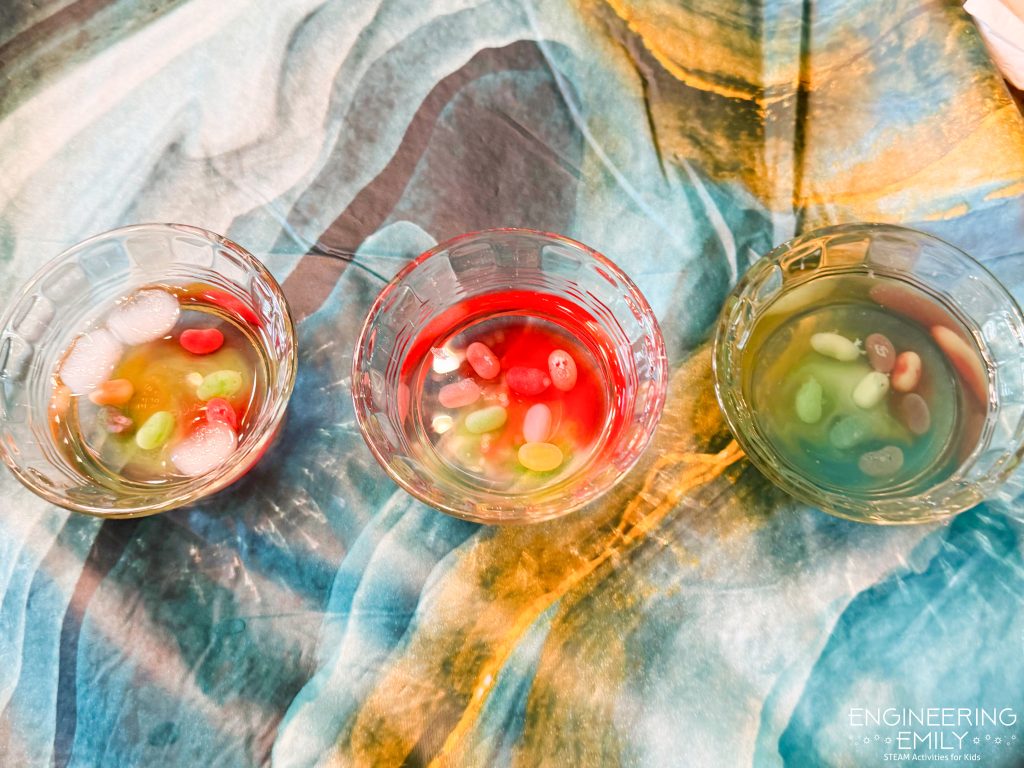
- The Hot water will begin to dissolve the jellybeans quickly. The colors will bleed into the water, and the waxy coating on the jellybean will begin to separate from the jellybean within a few minutes.
- The room temperature water will have similar results to the hot water, but at a much slower pace.
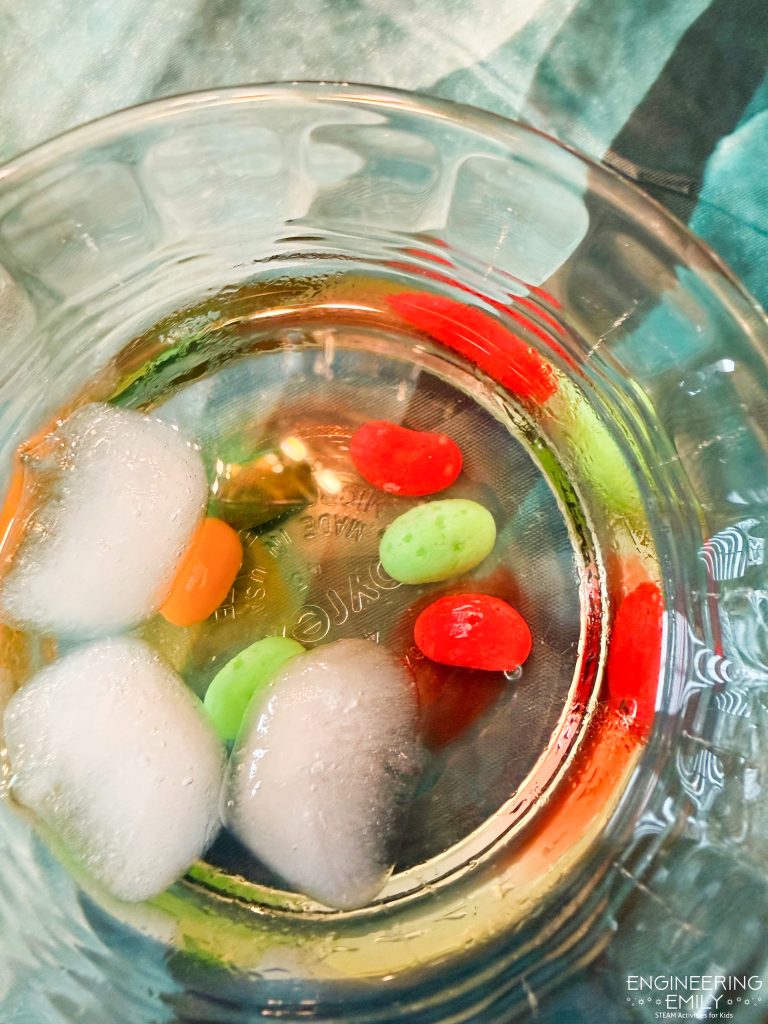
- The ice water will see very little change in the jellybeans until you have left it long enough for the ice to melt and the water to come to room temperature.
Our results after about 5 minutes:
STEAM Concepts Learned:
Jellybeans are our solute and they dissolve in a solvent (water) to form a solution. The concentration, the polarity, and temperature of each solvent, can all affect how well the jellybeans dissolve in the solvent. Jellybeans will dissolve quicker in hot water than in room temperature or ice water due to the molecules in the hot water moving faster making the solute dissolve quicker.
Watching the Jellybelly word float away from the jellybean and the waxy layer separate was so fun and interesting to my kids. They always enjoy this experiment, and I’m sure we’ll try it with more types of candies in the future.
Watch on YouTube:
You can see my full YouTube video of the experiment below:
Even though Easter feels like a distant memory during this end of school year craziness, my kids and I still enjoyed these experiments. They are just the kind of simple, easy, and fun experiments we need right now. We hope you try them and enjoy them too (even if you don’t try until next year!), and let us know what you think in the comments below.
Don’t forget to check out my two books STEAM Activity Journal and The Amazing Book of STEM (both available on Amazon) to keep the kids busy, entertained, and learning this summer!